
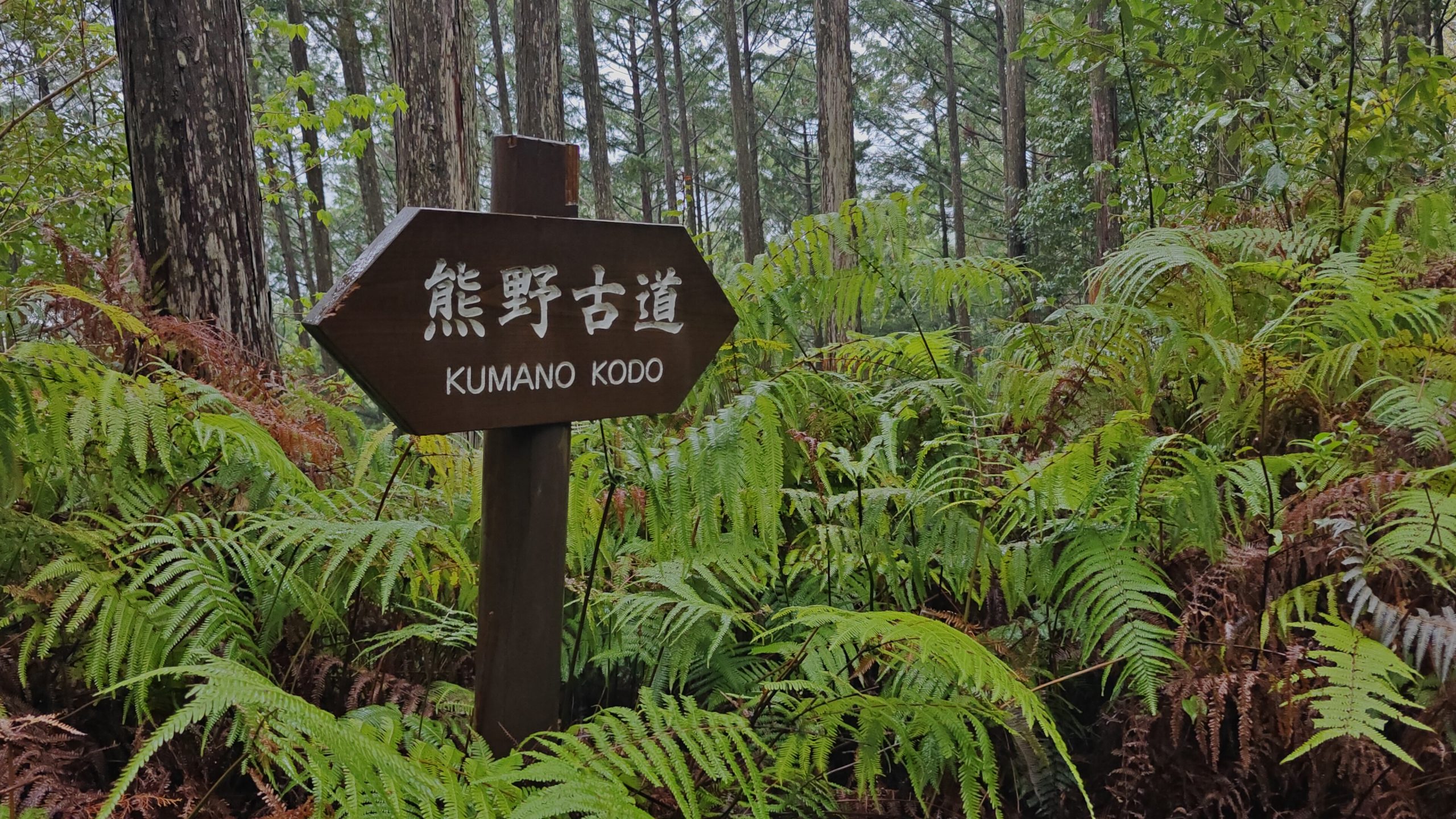
Imagine hiking along thousand-year-old stone paths, surrounded by towering cedar trees and whispering bamboo groves. Mist rolls through the mountains like a Studio Ghibli dreamscape. This is the Kumano Kodo (熊野古道) — one of Japan’s most sacred pilgrimage routes, nestled in the heart of Wakayama Prefecture on the Kii Peninsula.
The Kumano Kodo isn’t just a trail; it’s a living tradition with a rich spiritual history. For over a millennium, emperors, religious and spiritual seekers have walked these paths seeking renewal and reflection.
On my most recent trip to Japan, I set out to walk sections of the Nakahechi Route, the most popular and accessible route of the Kumano Kodo trails. It turned out to be one of the most meaningful hiking experiences of my life.
Kumano Kodo Pilgrimage Series
If you’re thinking about walking the Kumano Kodo pilgrimage, I’ve written a series of posts on planning your Kumano Kodo hiking adventure.
This post is Part 1 of my Kumano Kodo Series. The rest of the series will cover these topics:
- Complete Guide to Planning the Nakahechi Route
- How to Pack for Your Kumano Kodo Pilgrimage
- Lodging Types on the Kumano Kodo & My Personal Experiences
- Top Memories from My Pilgrimage
- What to Do Before & After Kumano Kodo | Trip Extension Ideas
I’ll add links to these posts below as I publish them.


trail information
DISTANCE: 70 km* (43 miles)
ELEVATION GAIN: ~4100+ meters (13500 ft)
TRAILHEAD: Takijiri-oji (Google Maps Link)
RATING: Moderate to Strenuous
BEST TIME TO GO: Spring and Fall
* I hiked the most scenic sections of the trail
watch this hike on Youtube
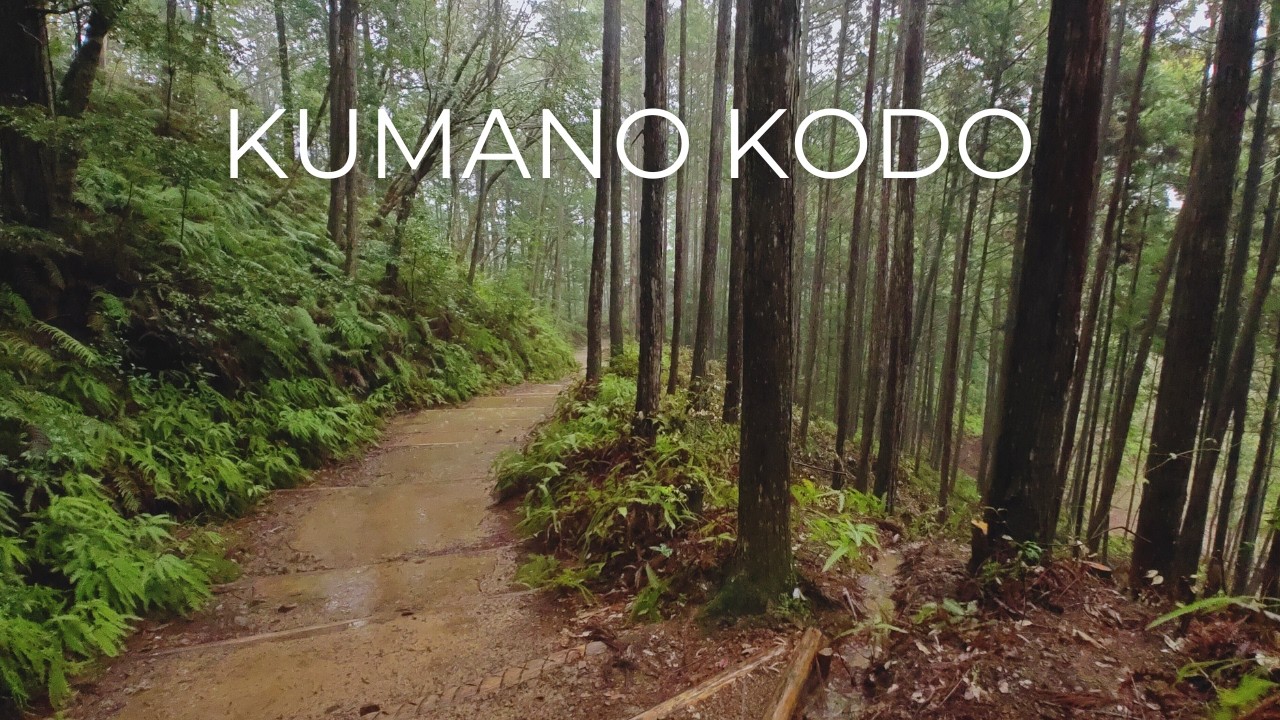
I made a YouTube video highlighting my four days on the Kumano Kodo Trail — watch it here. 👇
trail description
The Kumano Kodo is a network of ancient pilgrimage routes that weave through the misty mountains of the Kii Peninsula, south of Osaka.
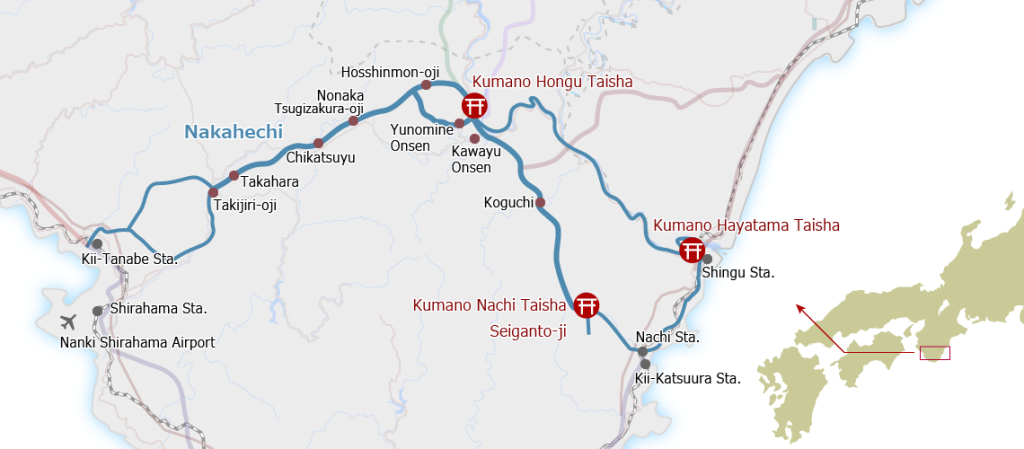
The most popular route is the Nakahechi (中辺路, meaning “the middle route”, or sometimes called the Imperial Route), which is what this blog post will focus on. The other routes are:
- Kohechi (小辺路, meaning “small side route”), the more rugged, mountain route with several mountain passes, and
- Ohechi (大辺路, meaning “great outer route”), the coastal route.
The term “Kodo” means “old roads”. On the Nakahechi, these sacred trails connect three grand shrines — Kumano Hongū Taisha, Kumano Nachi Taisha, and Kumano Hayatama Taisha — collectively known as the Kumano Sanzan.
Walking the trail isn’t just a physical challenge. It’s a spiritual journey that mirrors life itself: letting go of the past, grounding in the present, and stepping toward the future.
How I Ended Up Hiking Sections of the trail
So how did I end up here? Even though hiking the Kumano Kodo had been on my bucket list for years, this trip only came together at the last minute. I was already heading to Japan, found a small gap in my schedule, grabbed whatever accommodation I could, and just went for it.
Because I went during the busy season (Spring & Fall), I discovered that most of the accommodations were fully booked. Some people recommend booking these lodging choices as early as six months to a year in advance. Due to my last minute planning, I was only able to find accommodations at the gateway towns on either ends of the trail, plus 1 traditional inn in the middle of the trail.
What this meant is that, instead of staying at mountain villages along the 70 km trail, I’d have to bus in and out to the trailheads at the beginning and end of each day. I decided that this was a little too much of a logistical nightmare for me to handle, so I ended up building my itinerary around hiking the trail highlights and visiting all three grand shrines as part of my pilgrimage.
In my upcoming blog post, “Complete Kumano Kodo Nakahechi Guide”, I will provide detailed information to those of you who are planning to hike the entire Nakahechi trail, so you can avoid the mistakes I made.
And for anyone who is short on time and only wants to hike sections of the Kumano Kodo, this post will give you a starting point to plan your own adventure.
You can also watch my 4 Days on the Kumano Kodo Trail video to get a sense of the terrain and scenery you’ll encounter on this trail.
Day 1: From Takijiri-oji to Takahara
- Trailhead: Takajiri-oji (Show on Google Maps)
- Transportation: Take the bus from Tanabe Train Station to Takijiri-oji (Check Bus Schedule)
- Distance: 4 km (2.5 miles)
- Elevation Gain: ~350 meters (1200 ft)

The Journey Begins
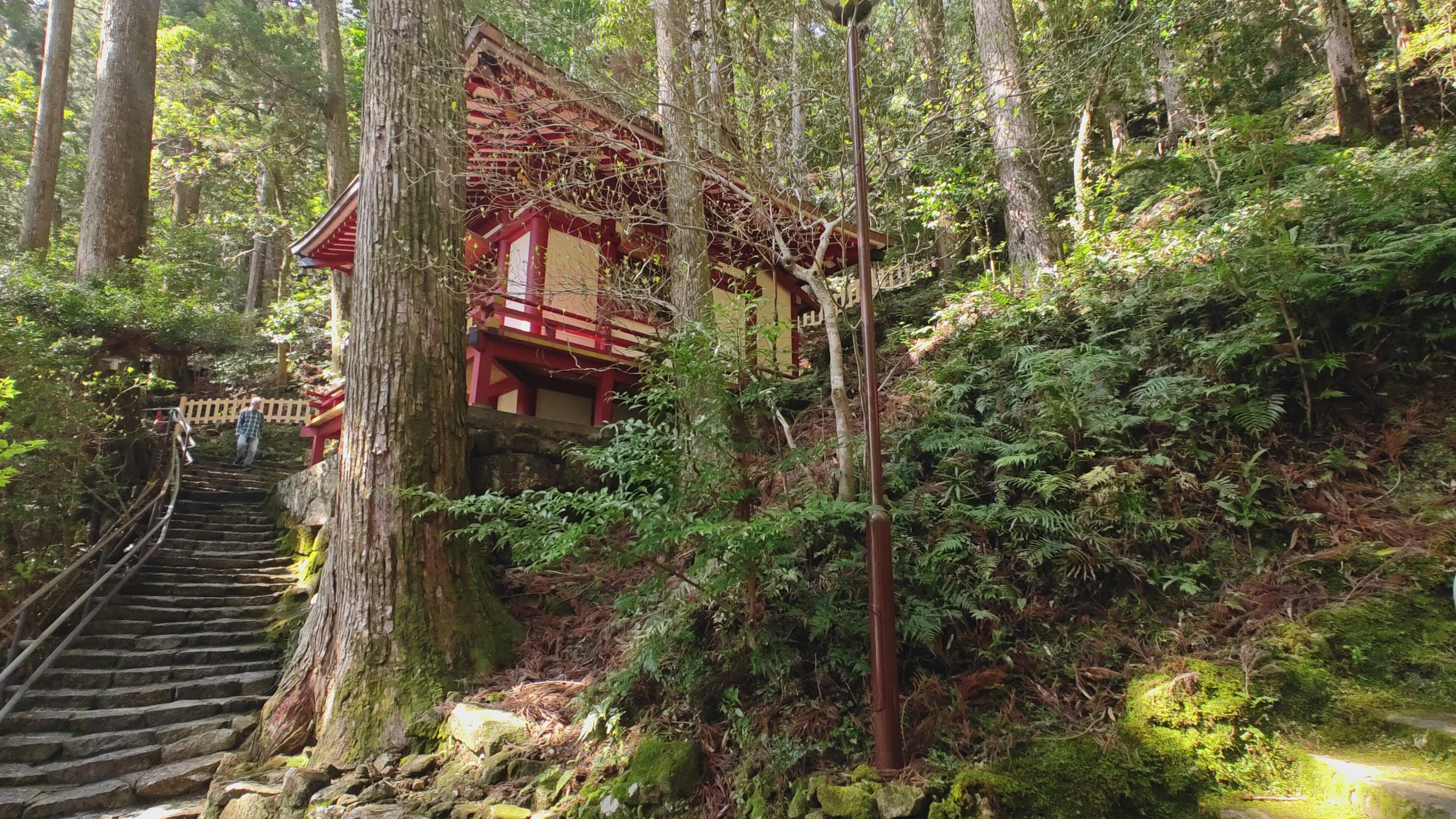
After a plane, train, and bus ride, I finally arrived at Takijiri-oji, the official starting point of the Nakahechi Route. There’s a small shrine here where pilgrims traditionally pray for safe passage. I did the same and it felt like the mountain spirits were listening.
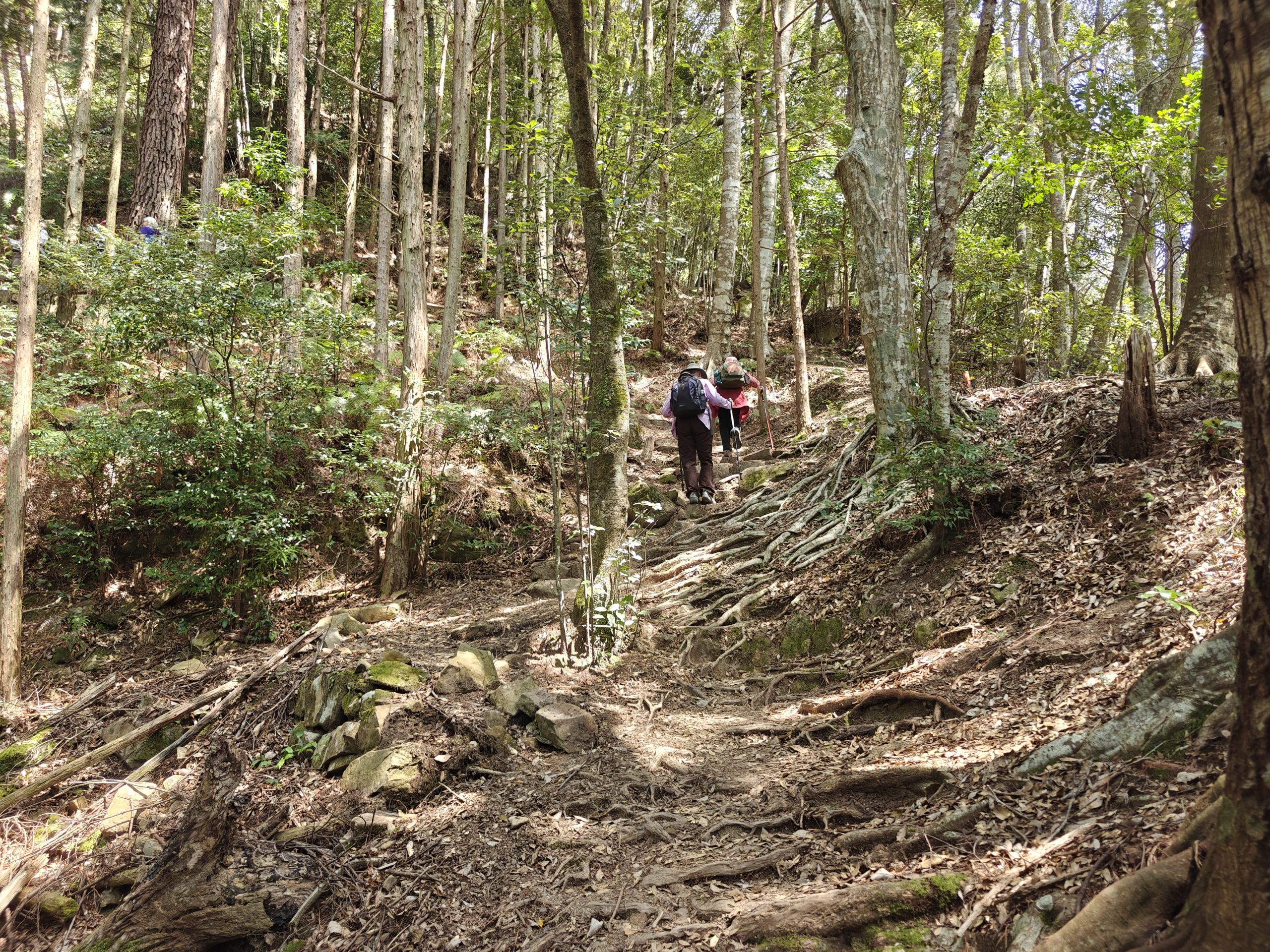
This first section, from Takijiri-oji to Takahara, is only 4 km (2.5 miles) but climbs steadily through dense forest — about 350 meters (1,200 ft) of elevation gain. The uneven stone steps and tree roots make it a challenging start, so trekking poles are highly recommended.
Midway up, I met a group of hikers from California. Talk about a small world! Hiking with them turned what was a solo hike into a shared adventure. We made steady progress, chatting as we climbed through the dense cedar forest. Between the trees, glimpses of misty mountains and quiet villages appeared like frames from a Miyazaki film.

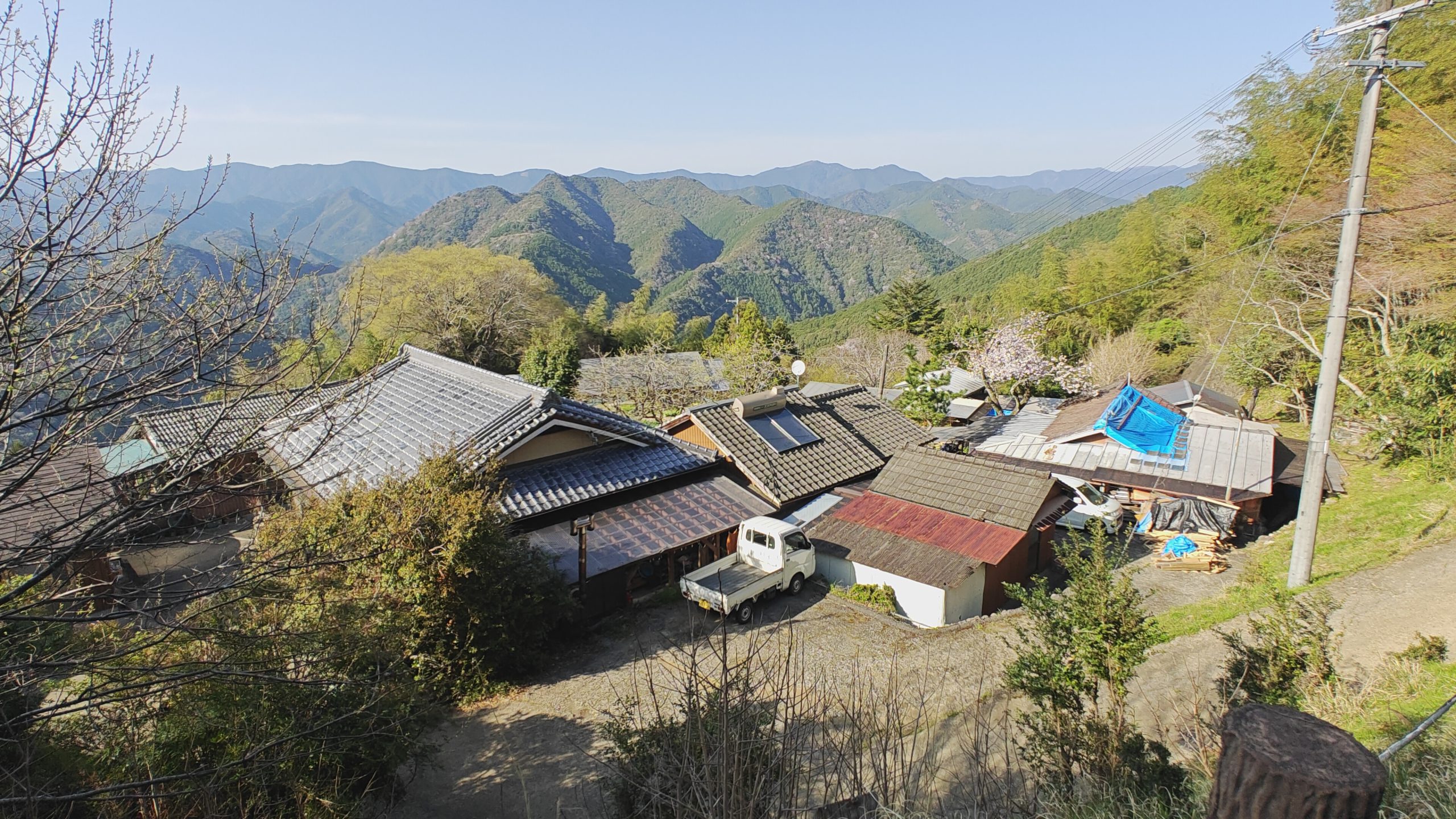
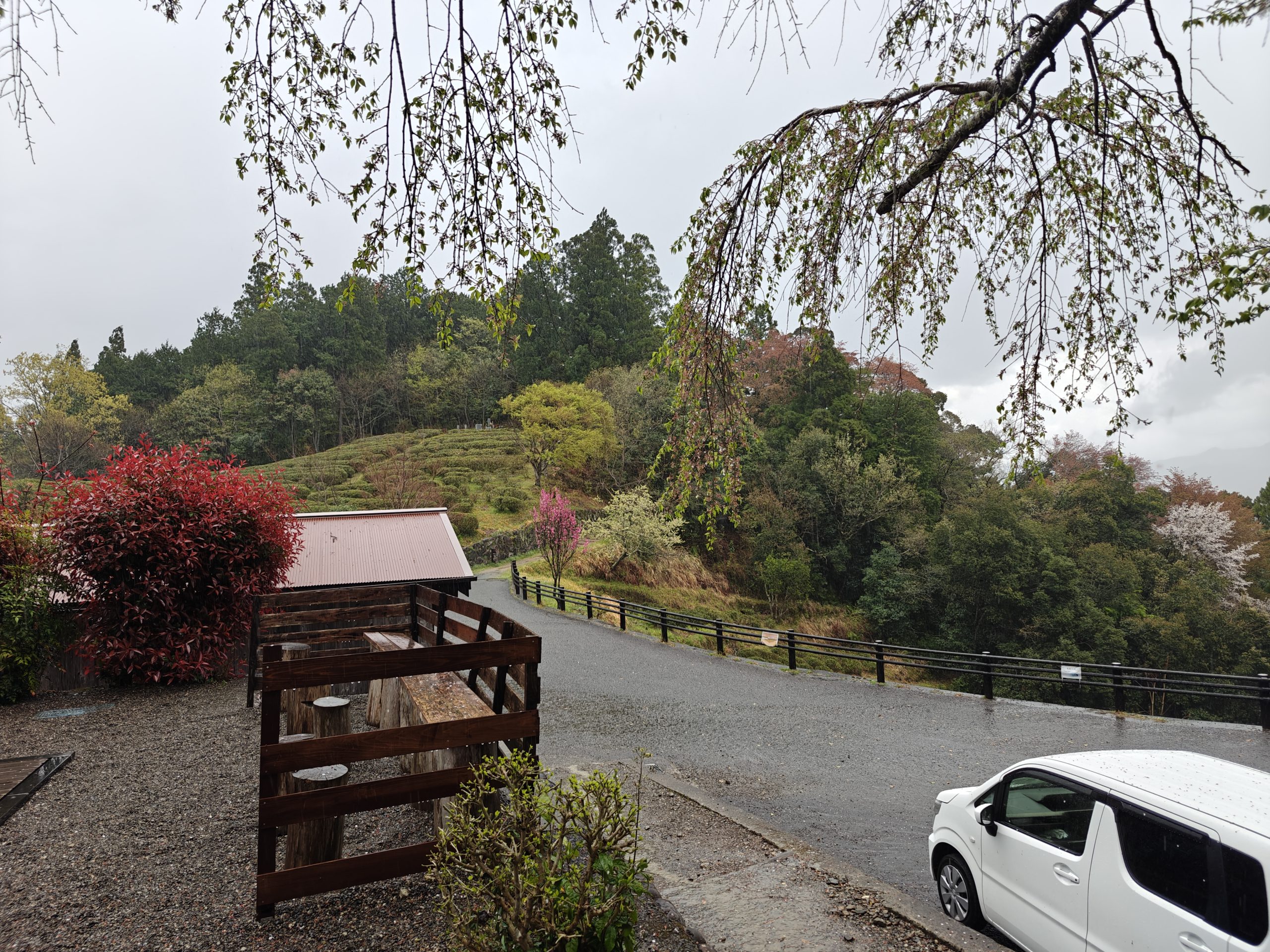
At the top, I reached a stunning overlook of a tea farm nestled in green hills. The view alone was worth the climb.
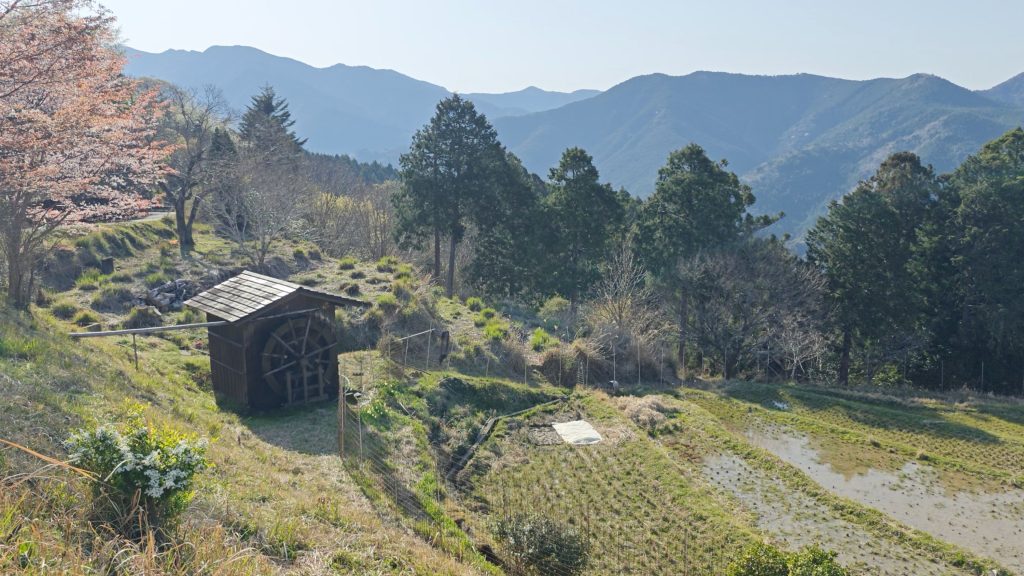
After saying goodbye to my new hiking friends, I headed to the bus stop.
A Trail Angel Appears Just in Time
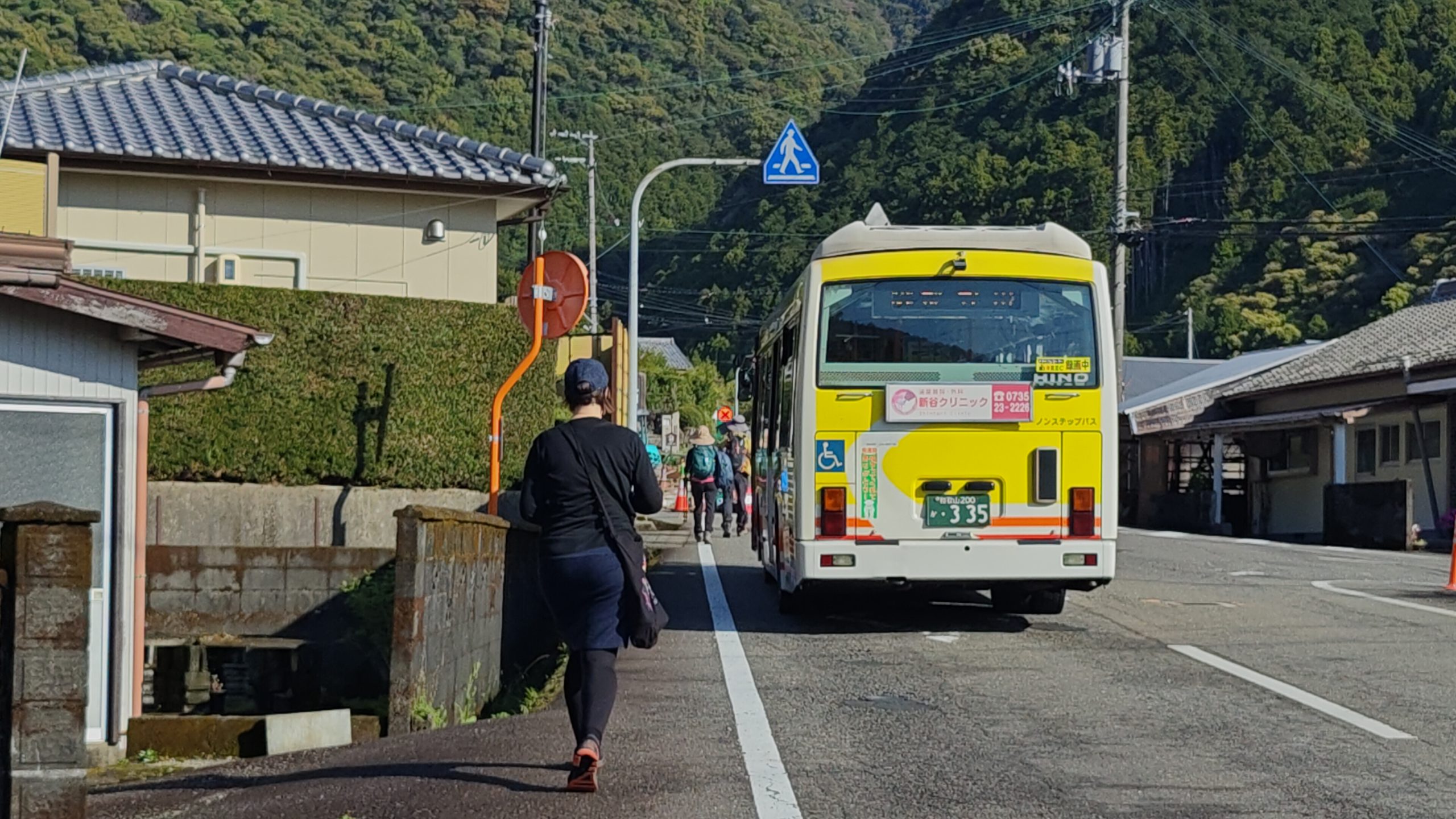
I went on looking for the bus station to get back to my hotel. I saw on Google Maps that there are two nearby bus stops from Takahara, but both required a 20-25 minute walk. I was confused about which bus station to choose. A shop owner pointed me in one direction while Google Maps pointed the other way.
That’s when my first trail angel appeared. A local woman approached and showed me the right direction. As we walked towards the bus station together, I discovered that she actually worked as a Kumano Kodo guide. When she realized that I’d just missed the bus and had to wait another hour for the next ride, she and her husband offered to drive me back to my hotel in Tanabe.
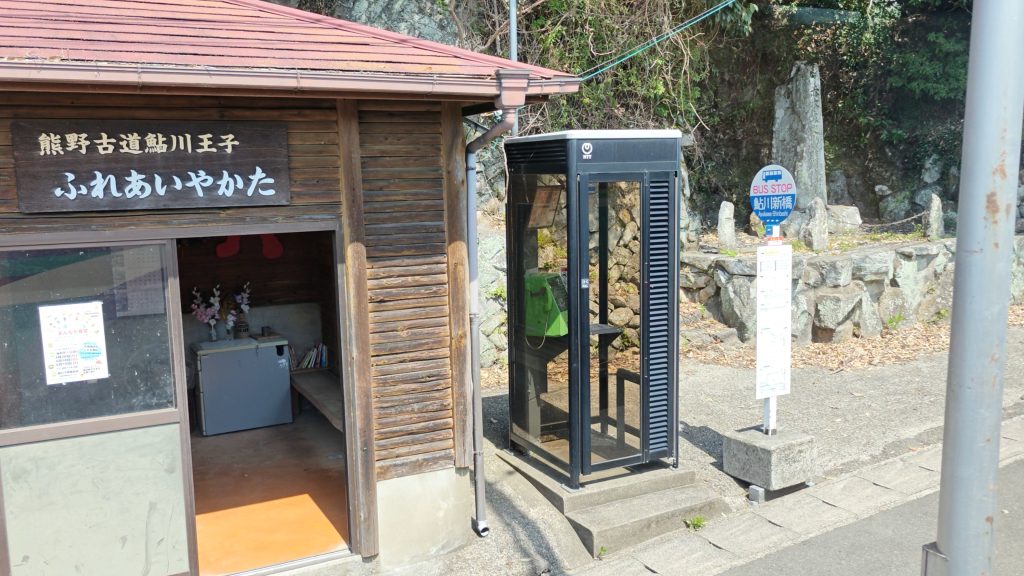
I mean, what were the odds?! On my very first day, I was rescued by someone who literally makes a living guiding people on this trail.
It was the perfect welcome to this pilgrimage: a challenging climb, unexpected companionship, and a taste of the kindness and hospitality that would follow me the whole journey.
Day 2: Rest Day at Watarase Onsen
Sometimes unplanned rest days are the best days.
After several nights of poor sleep prior to arriving in Japan, my body needed a break. Since this was also the night I’d booked a traditional ryokan with hot spring baths, I decided to slow down, listen to my body, and take a rest day.
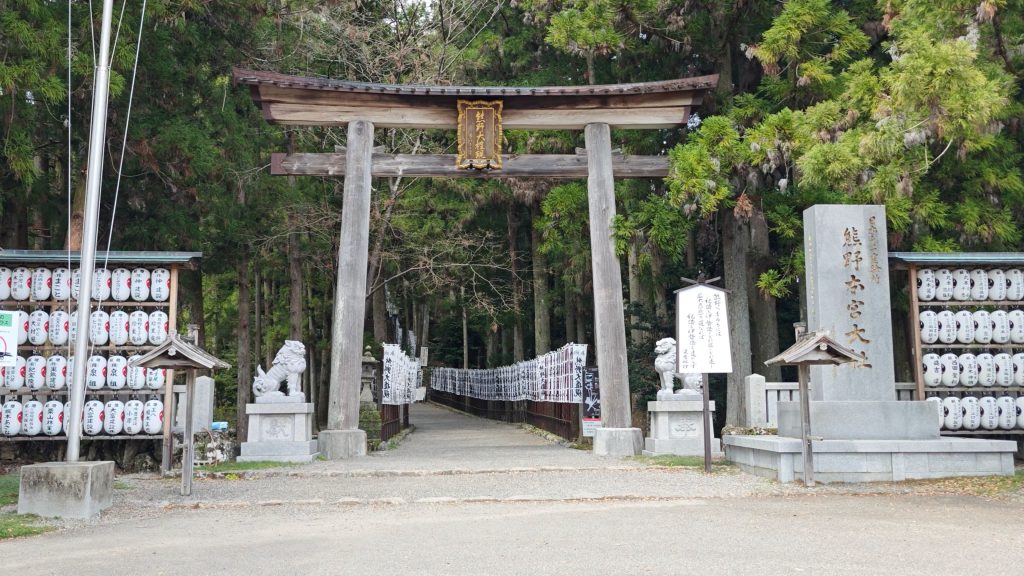
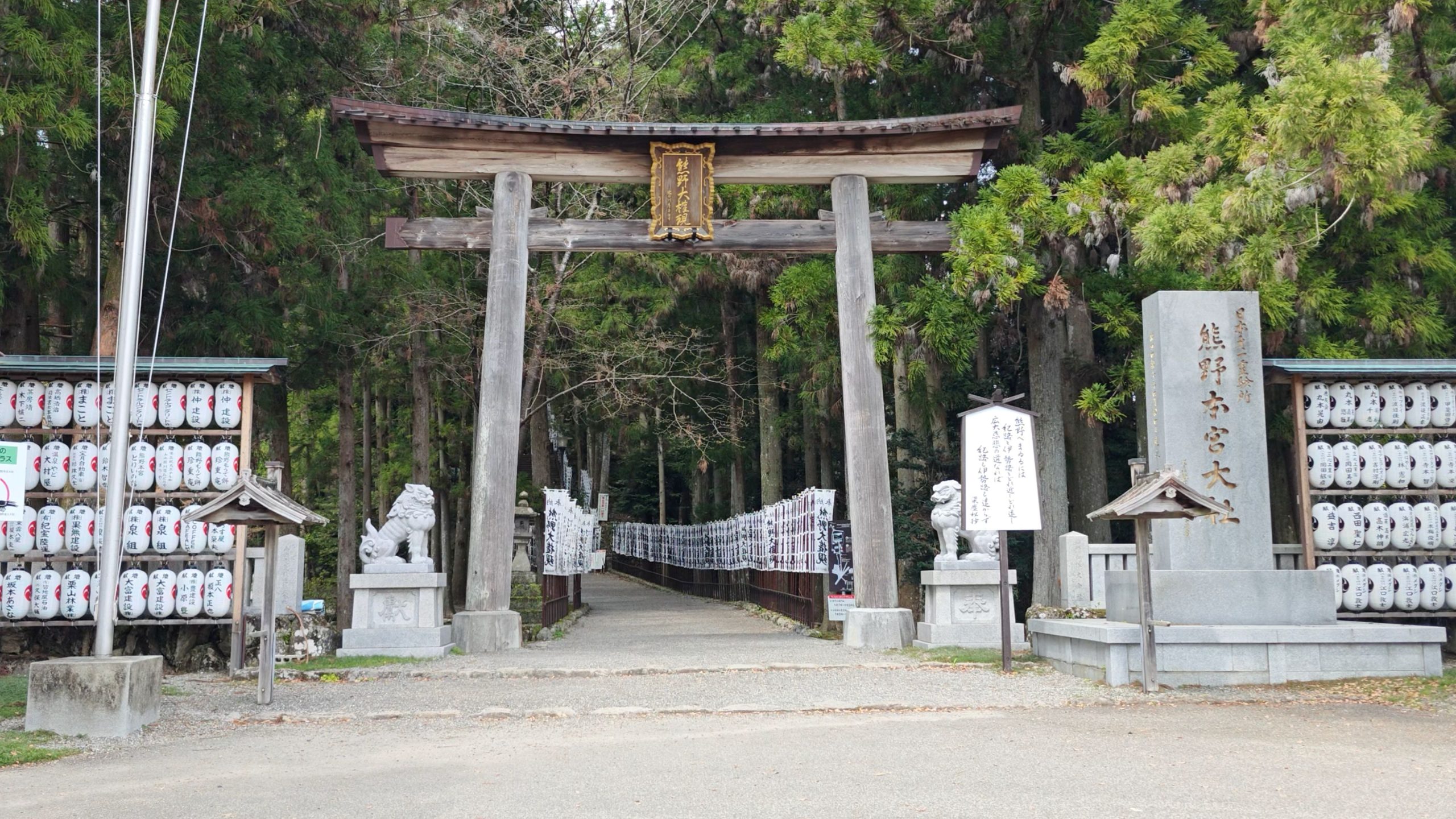
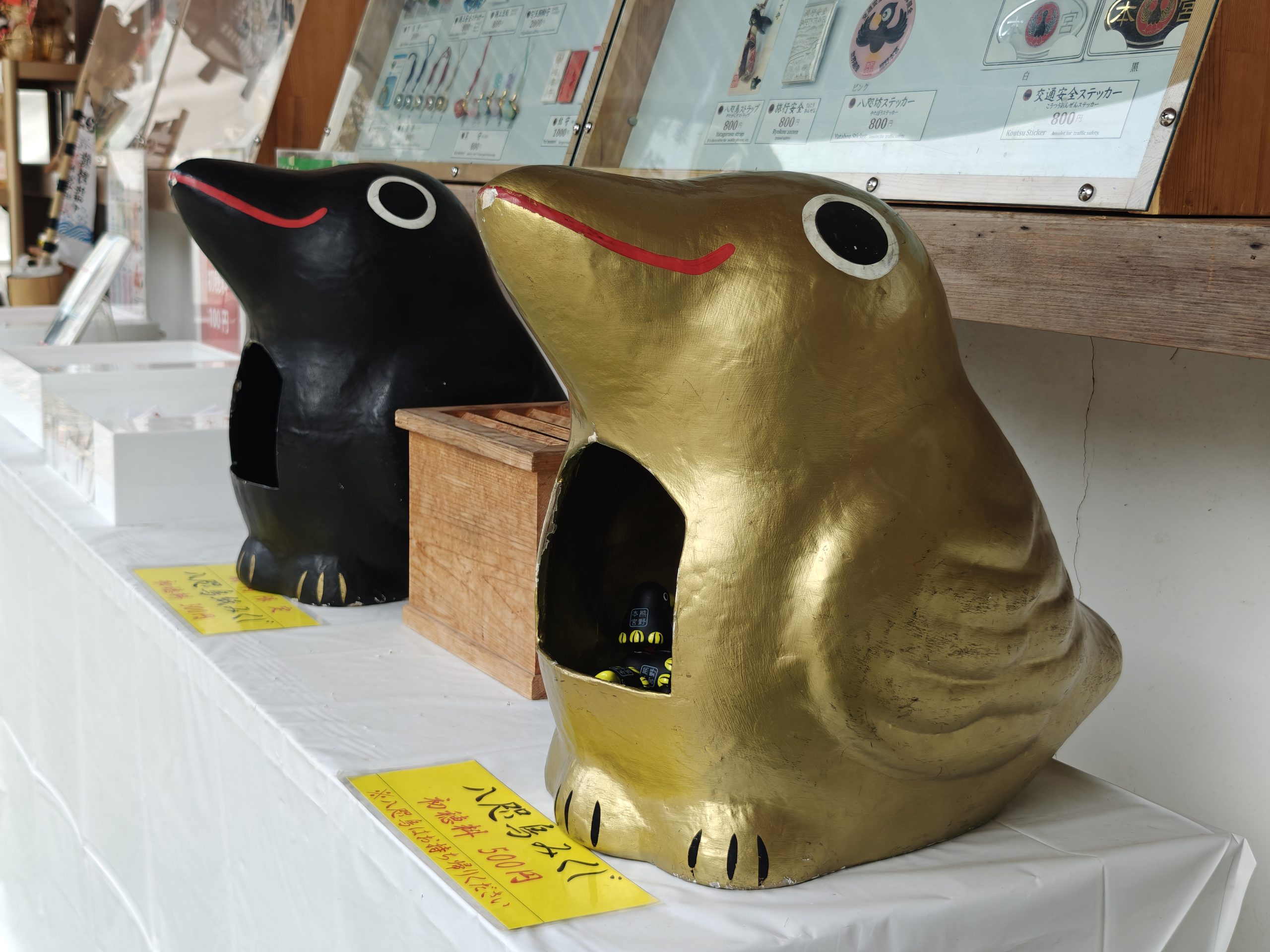
In the morning I hopped on a bus to Kumano Hongu Taisha, one of the three grand Kumano shrines I will be visiting on this journey. Each of these shrines carries a symbolic meaning.
- Hayatama Taisha – the past (cleansing and renewal)
- Nachi Taisha – the present (reflection and awareness)
- Hongu Taisha – the future (hope and spiritual rebirth)
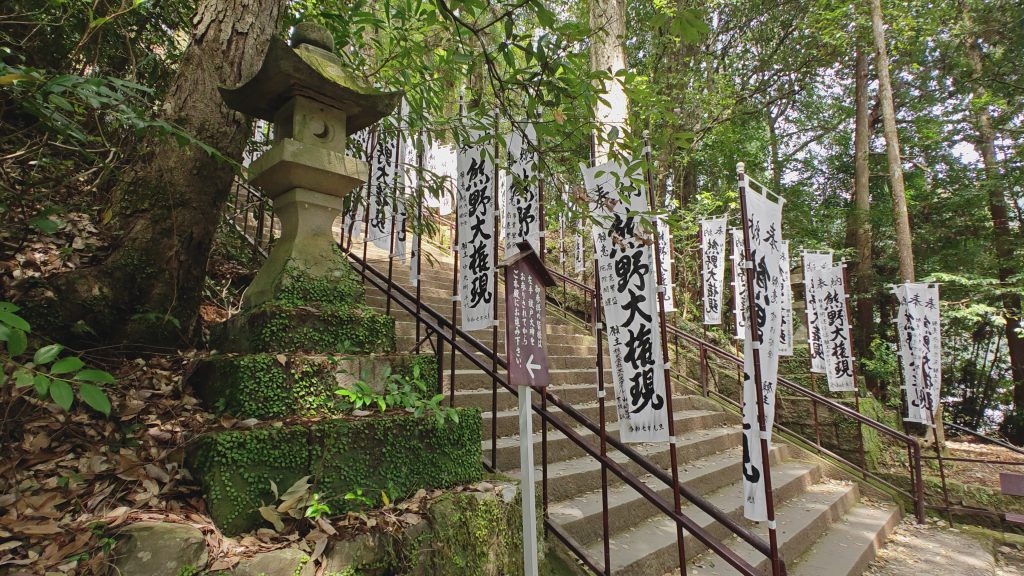
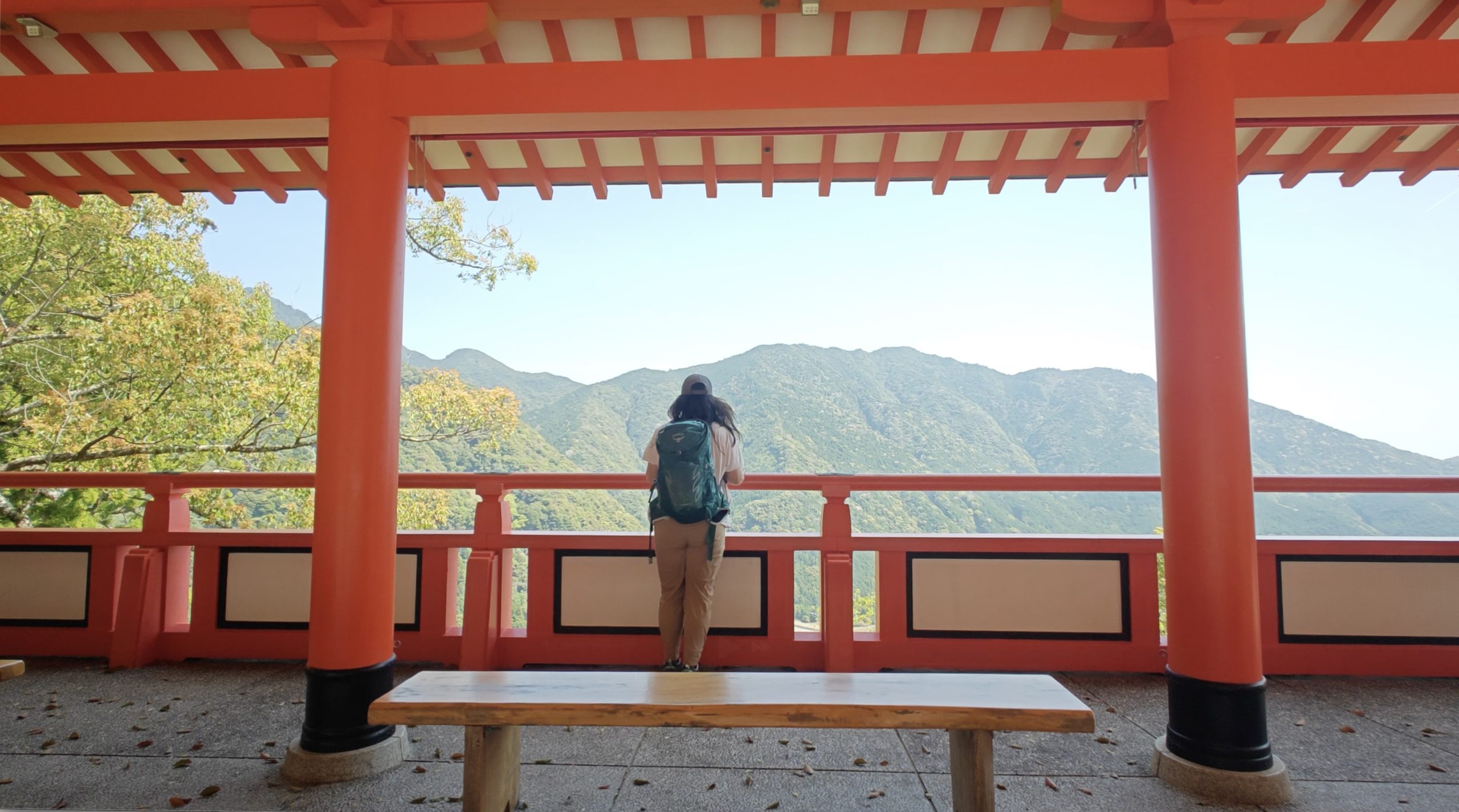
Kumano Hongu Taisha represents the future. A place to pray for blessings and salvation in the life ahead.


Finding Serenity & Taking a much needed nap

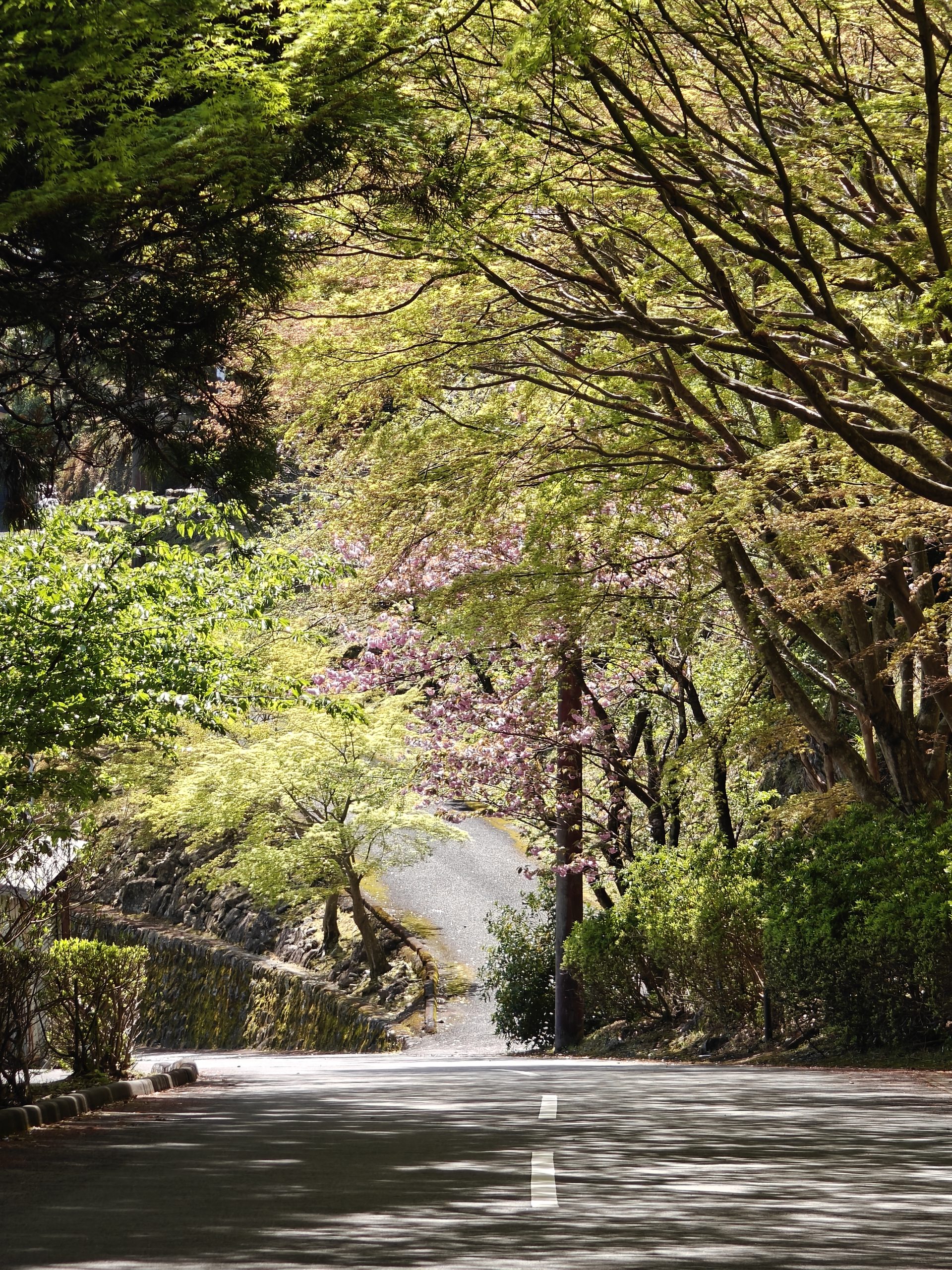
After my visit I took the bus to Watarase Onsen, my home for the night. It’s a five-minute downhill stroll from the bus stop, past cherry trees scattering pink petals on the path. My room has the traditional Japanese tatami and futon setting. It’s spacious, clean and lovely.
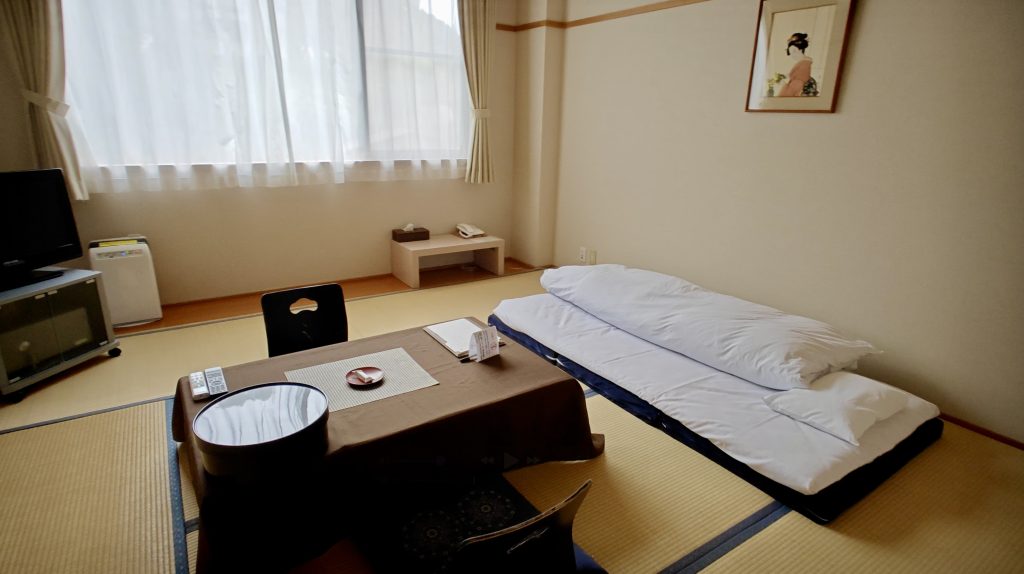
After checking in, I took a nap before exploring the hot spring baths.
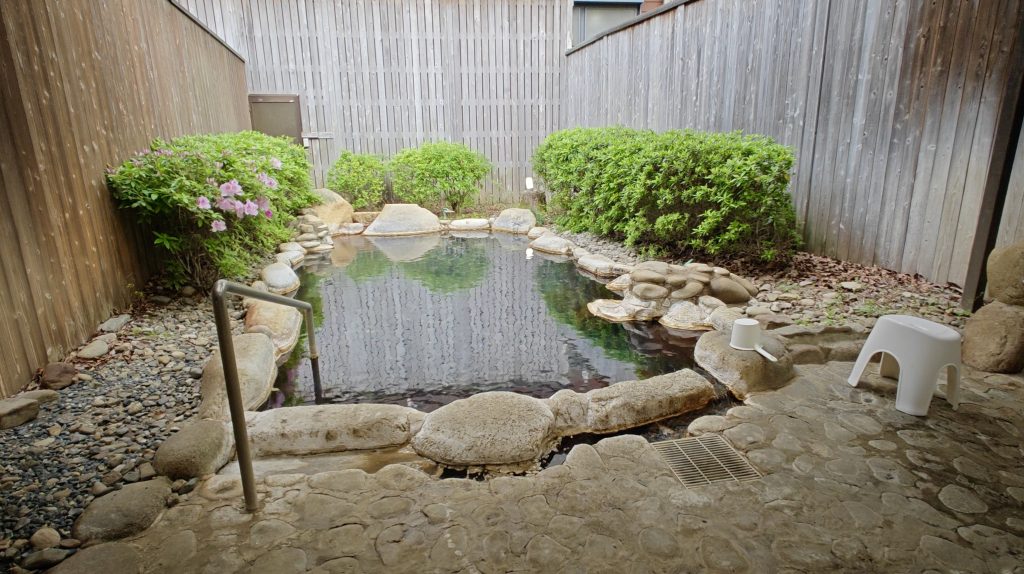
Watarase has both large communal baths and private baths. After several hectic travel days, soaking in those mineral-rich hot springs was exactly what my body needed.

Dinner was tempura udon served warm. (The ryokan also a multi-course kaiseki dinner if you reserve it ahead of time.) By the end of the day I felt like a different person: rested, restored, and ready to keep going on the trail.
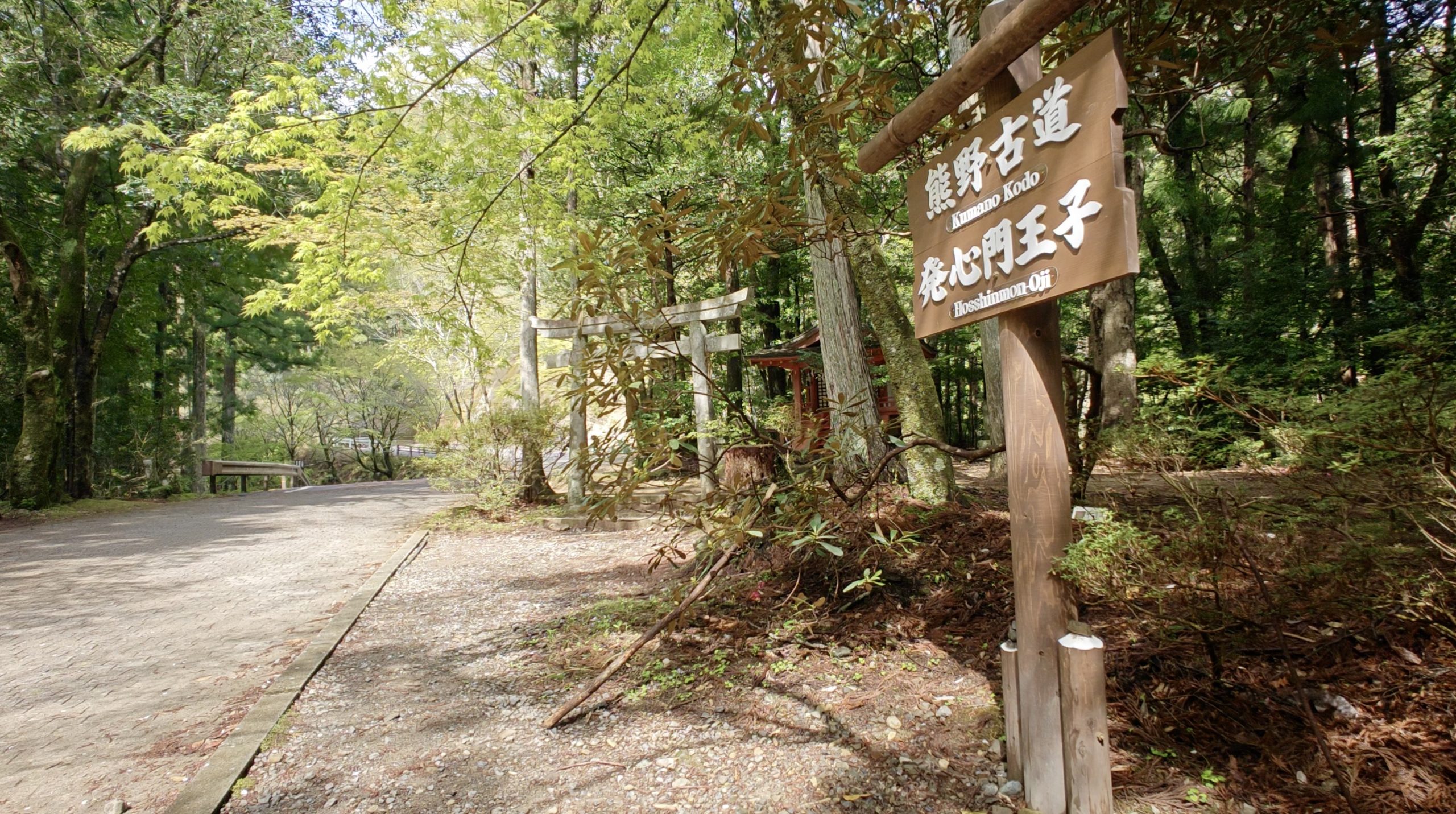
Day 3: From Hosshinmon-oji to Kumano Hongu Taisha
- Trailhead: Hosshinmon-oji (Show on Google Maps)
- Transportation: Take the bus Hosshinmon-oji stop (Check Bus Schedule)
- Distance: 7.5 km (5 miles)
- Elevation Gain: ~190 meters (600 ft) | Elevation Loss: 460 meters (1500 ft)
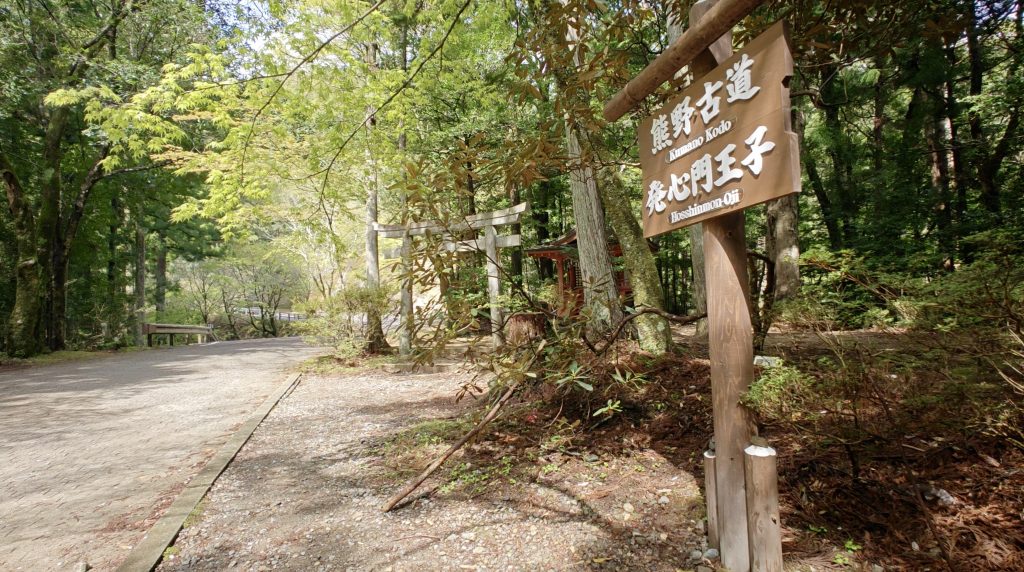
Trail Angel, Thunderstorm & Enchanting Teahouse
Feeling refreshed, I set out from Hosshinmon-oji, hiking the scenic 7.5 km section to Kumano Hongu Taisha.
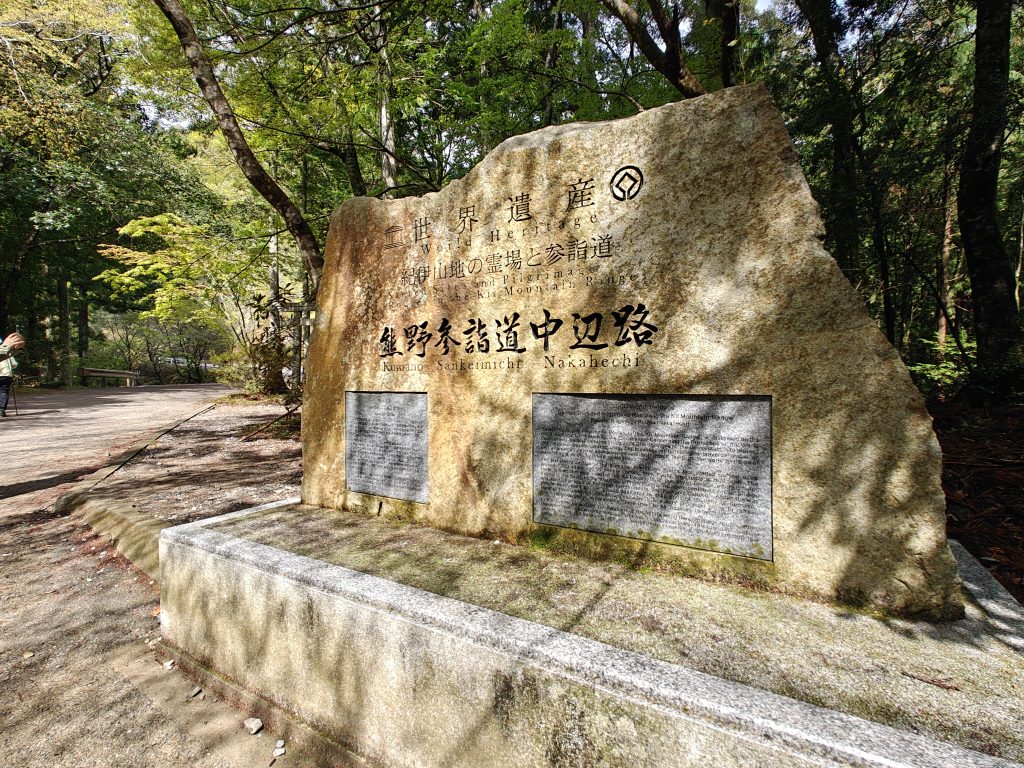
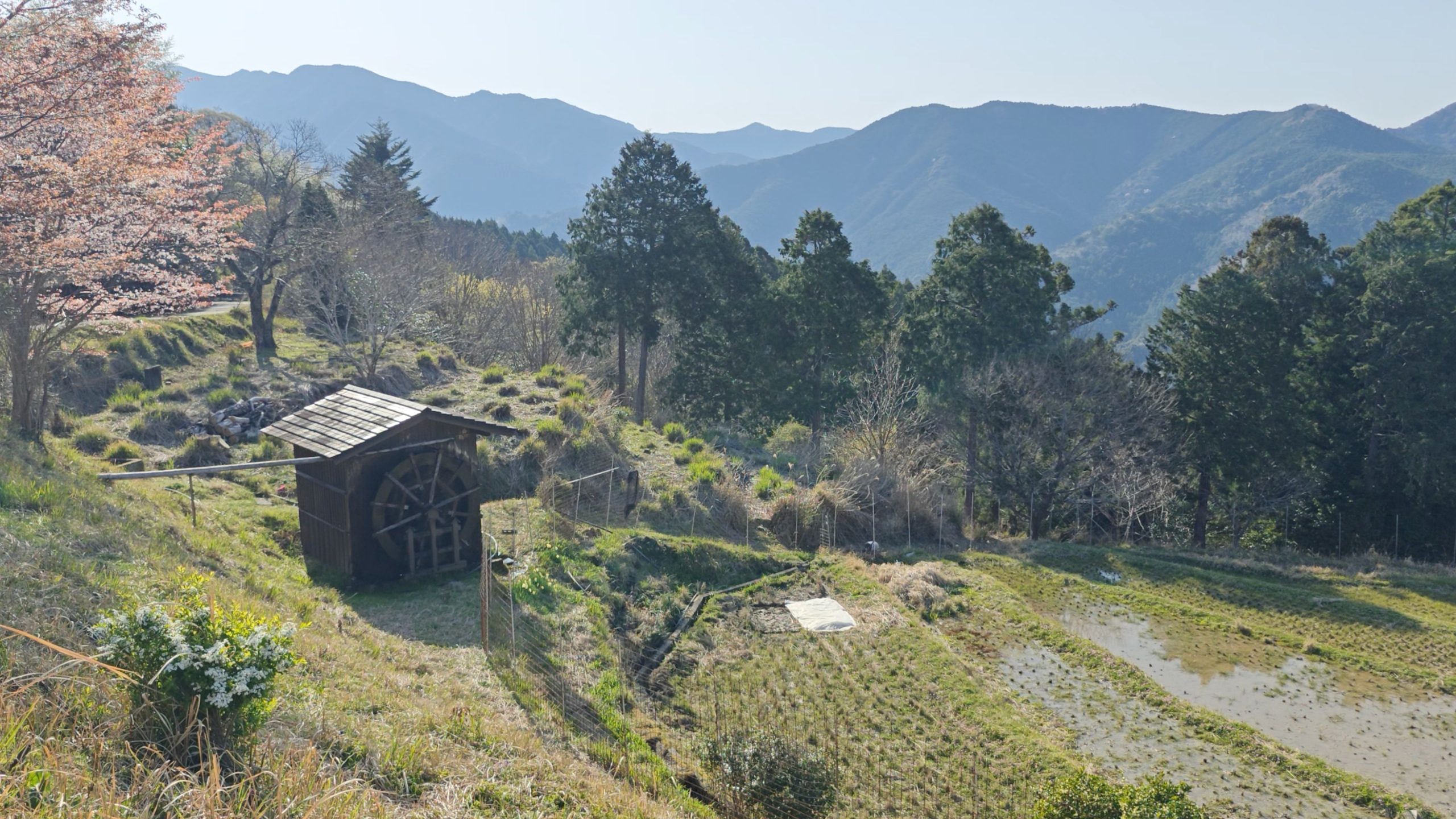
This stretch is gentle and varied — a mix of forest trails, small villages, and ridgeline views.

Early on, I met a professional mountain guide who was scouting the trail. We ended up hiking together, and he generously shared insights about the shrines and the Kumano Kodo.
Halfway through, a thunderstorm rolled in — and just as lightning struck, we stumbled upon a rest stop where two local women were serving fresh coffee in porcelain cups for 200 yen. It became an impromptu hiker gathering from around the world, all waiting out the storm together, swapping stories and drinking coffee as the rain fell. We looked like a United Nations of hikers.
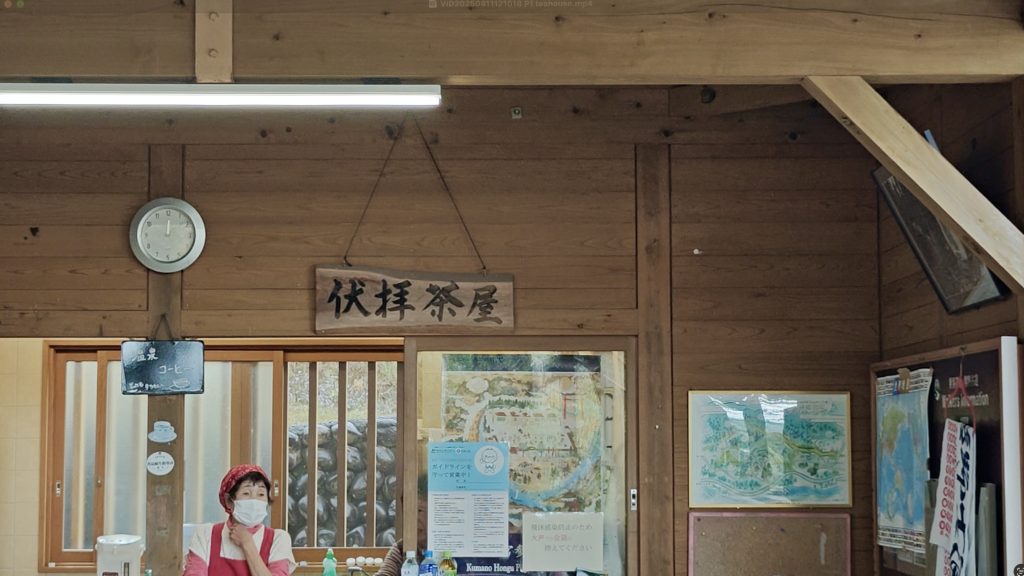
The rain didn’t stop, so it was time to continue. I set out hiking with my umbrella – a cheap & lightweight version I picked up at a 7-eleven in Osaka – to keep my backpack dry. It worked for a little while, but I soon regretted my choice of umbrella.
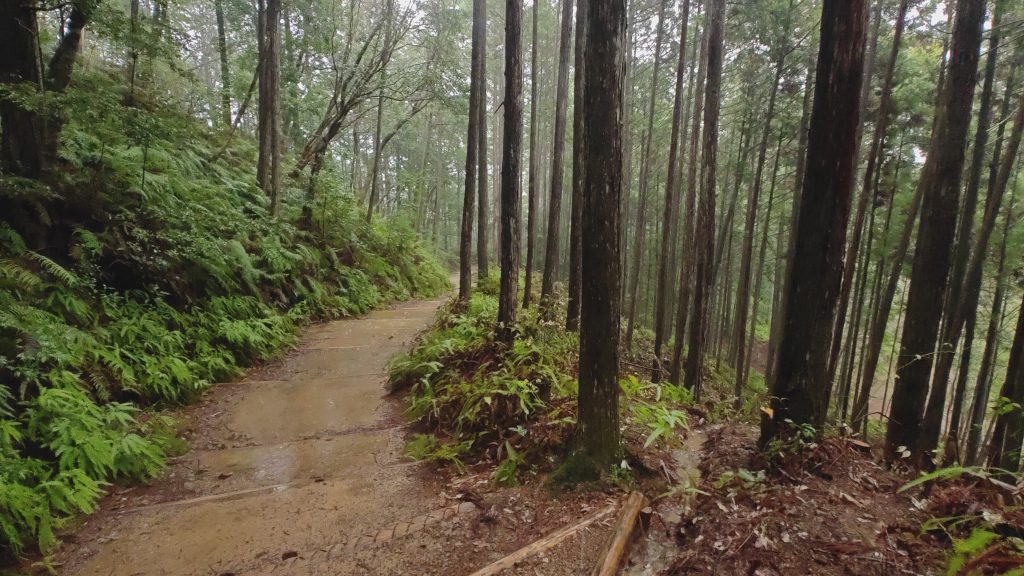
It absolutely could not stand up to even the slightest wind. It would flip open constantly. It drove me crazy. Finally I decided to put away the umbrella and just hiked in my rain jacket.
But, despite all that, I really enjoyed this section of my Kumano Kodo pilgrimage. The drizzling rain, the occasional thunder, and quiet solitude made me become fully aware of my surroundings. I could hear and feel the aliveness of the forest.

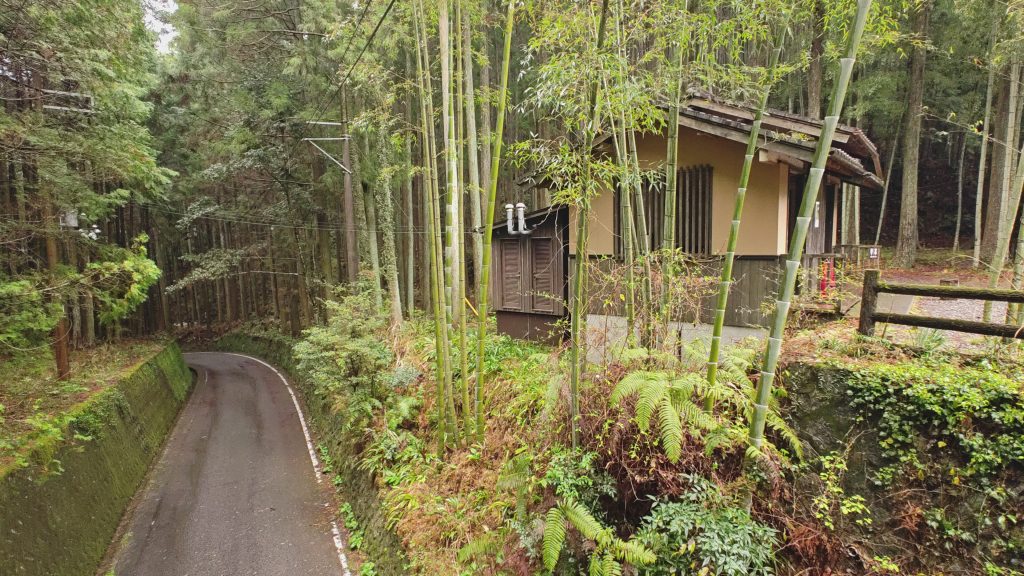
By the time I reached Hongu Taisha, the rain had stopped. Even though I had visited this very same grand shrine a day before, I still learned something new. I explored the shrine’s inner courtyards & prayed to each of the deities.


Since I had bit of time before my scheduled bus transfer, I walked down to Oyunohara, the original Kumano Hongu Taisha site. It was destroyed by a flood in 1889. Now the towering, iconic torii gate (Japan’s largest) stands at its former site overlooking the Kumano River.
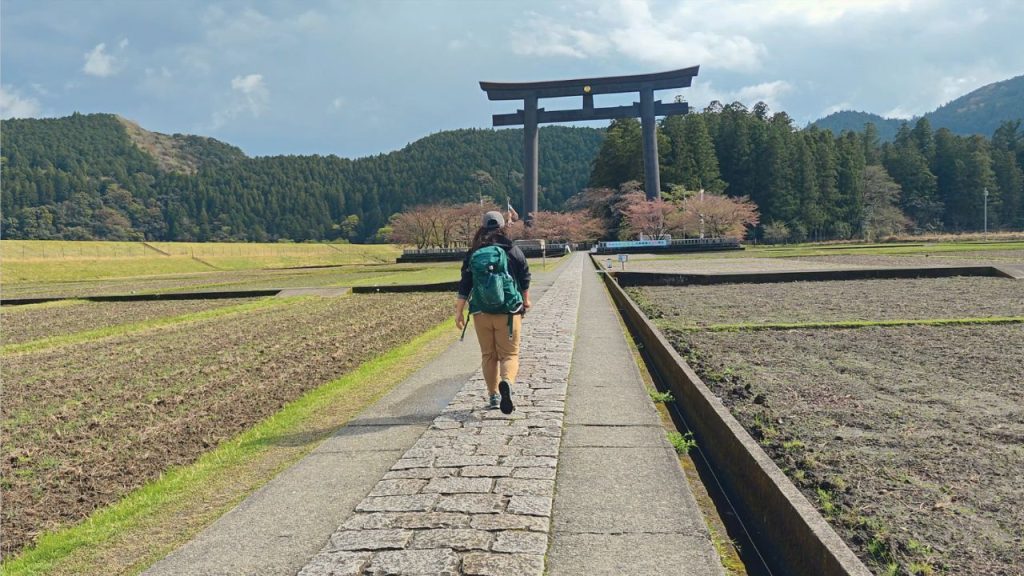

Afterwards, I took the bus to Katsuura, where I spent the next two nights.
Day 4: Daimonzaka to Kumano Nachi Taisha & Nachi Falls
- Trailhead: Daimonzaka (Show on Google Maps)
- Transportation: Take the local bus to Daimonzaka stop (Check Bus Schedule)
- Distance: 4.5 km (2.8 miles)
- Elevation Gain: ~300 meters (1000 ft)
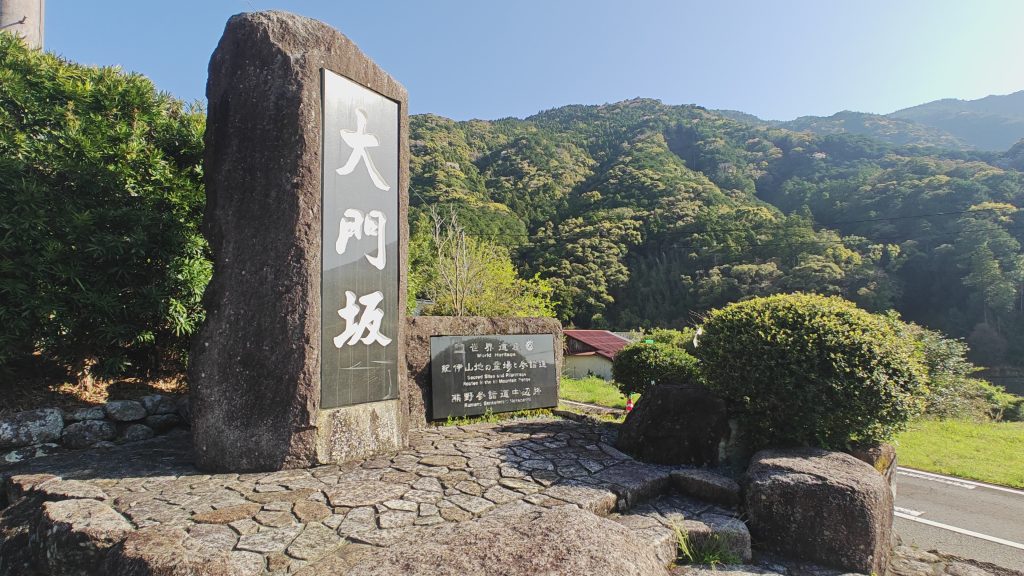
Waterfalls, Shrines & a Cave Onsen
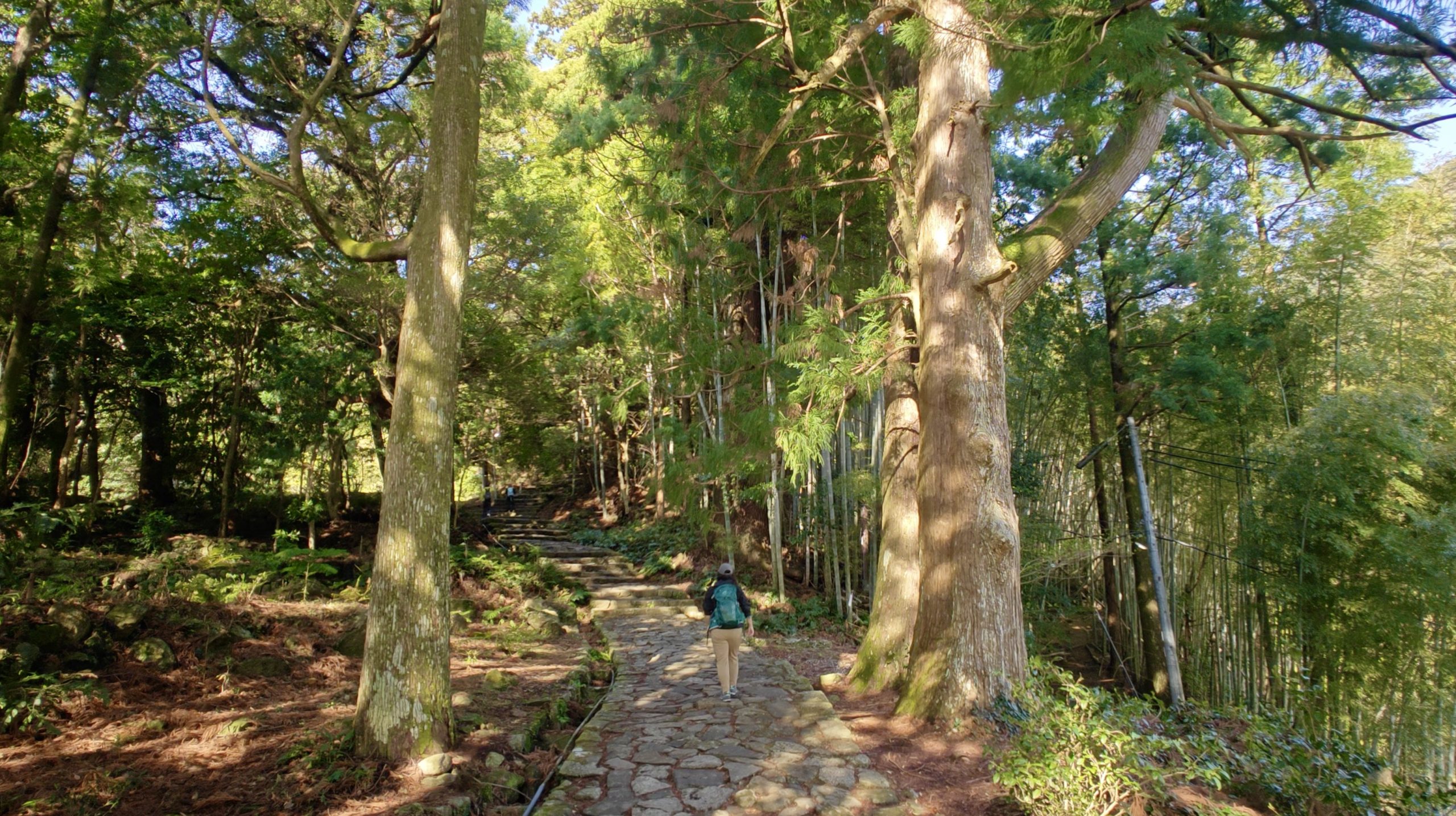
This was the most scenic day of the entire trip. The Daimonzaka trail is a moss-covered, stone paved path flanked by towering 800 year-old cedar trees.

You’ll pass a small touristy street with shops selling local foods & souvenirs.
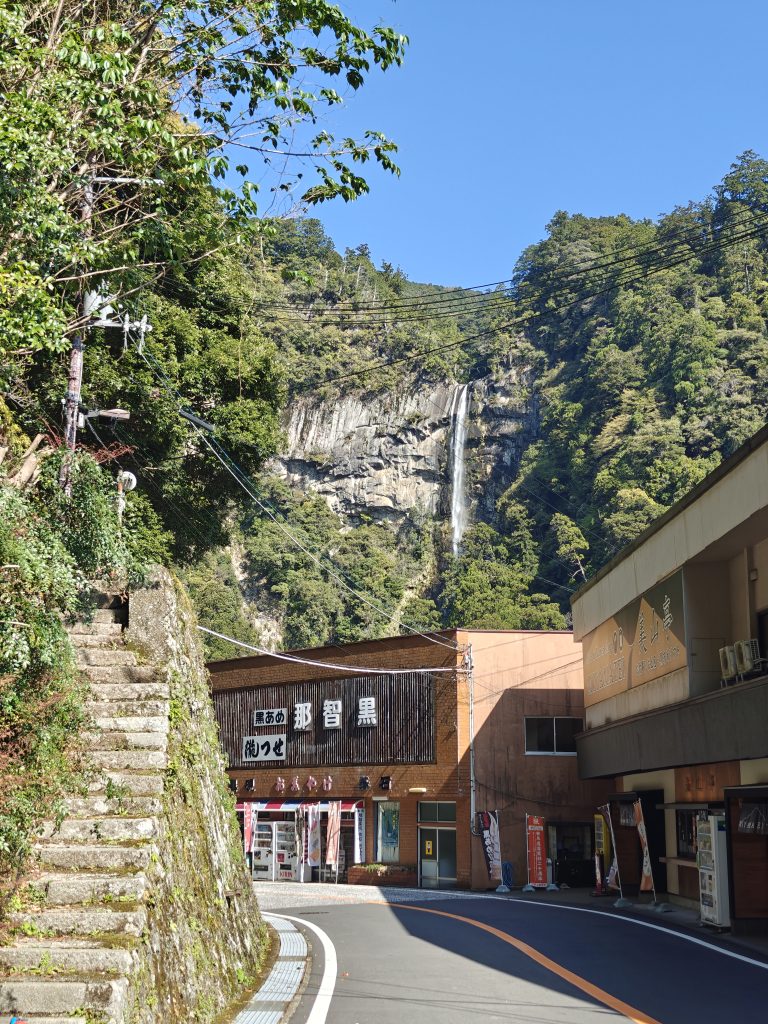
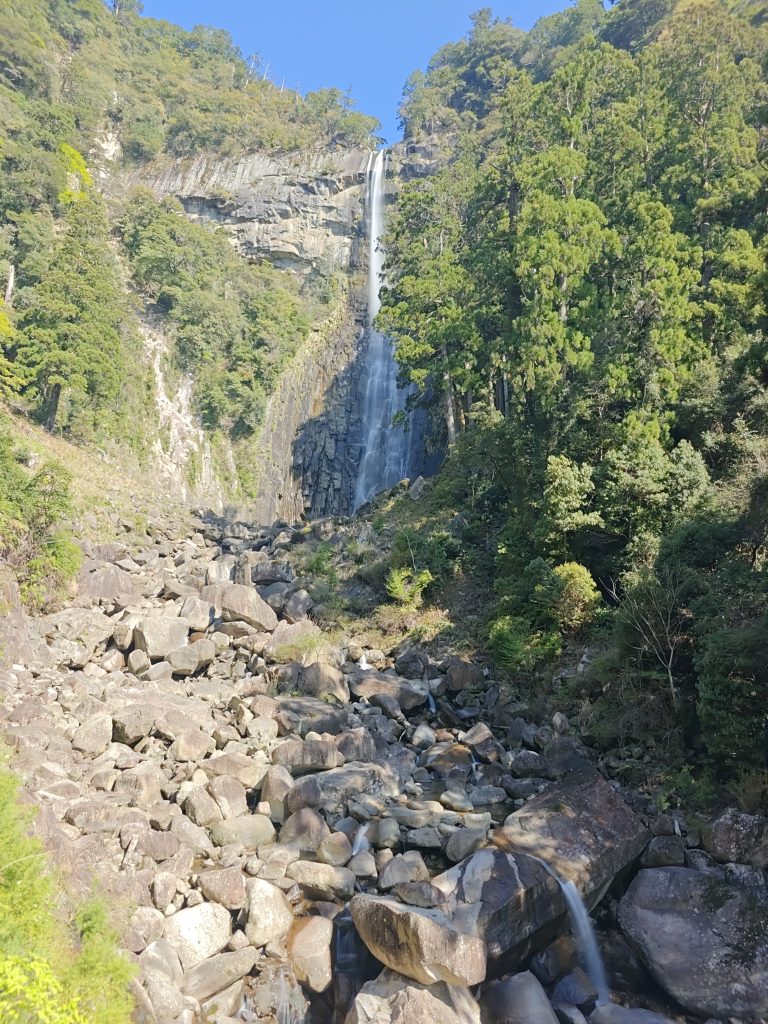
Soon I arrived at Nachi Falls, Japan’s tallest single-drop waterfall at 133 meters.

Unlike other shrines which house various deities, the shrine at Nachi Falls is faced towards the waterfalls – you’re essentially bowing and praying to the spirit of the waterfalls.
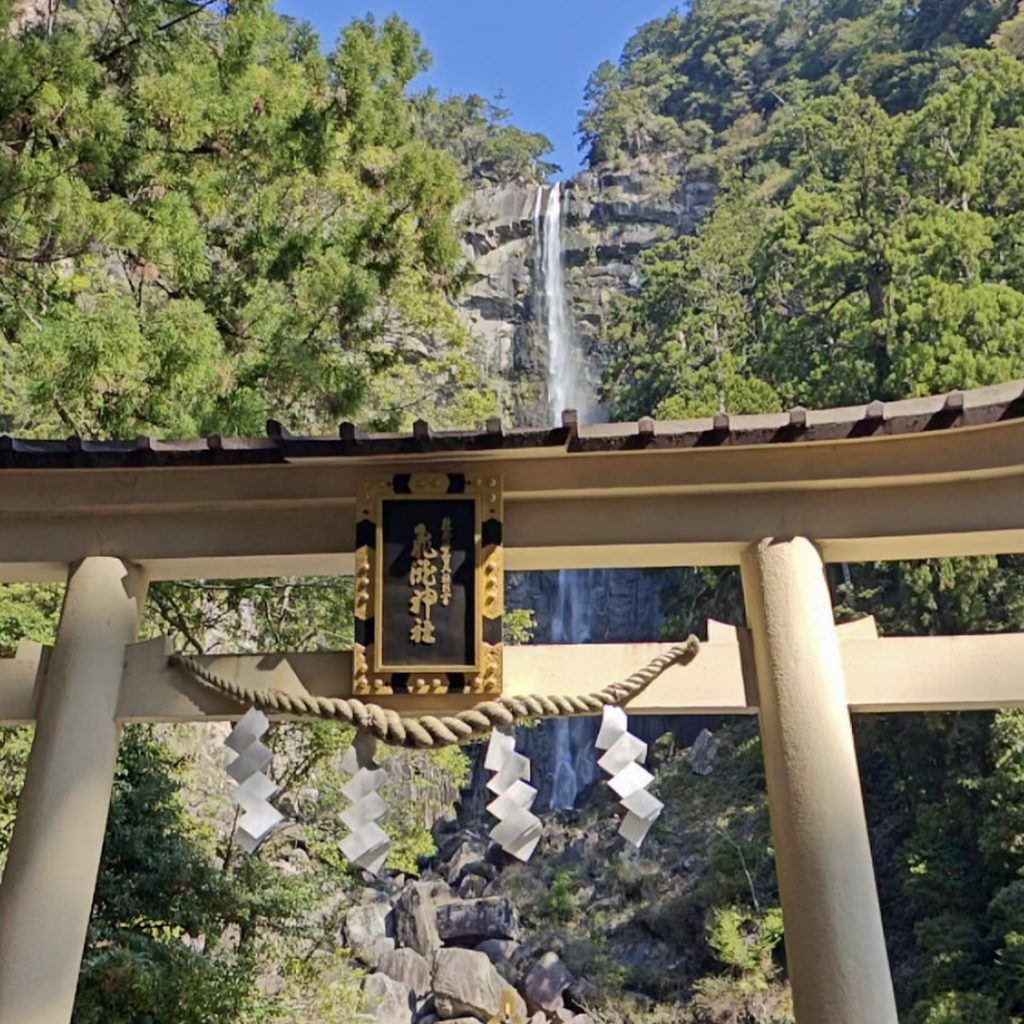
I thought about how ancient pilgrims viewed this place as sacred and alive with spirits. I couldn’t agree with them more as I stood besides the waterfalls and took it all in.
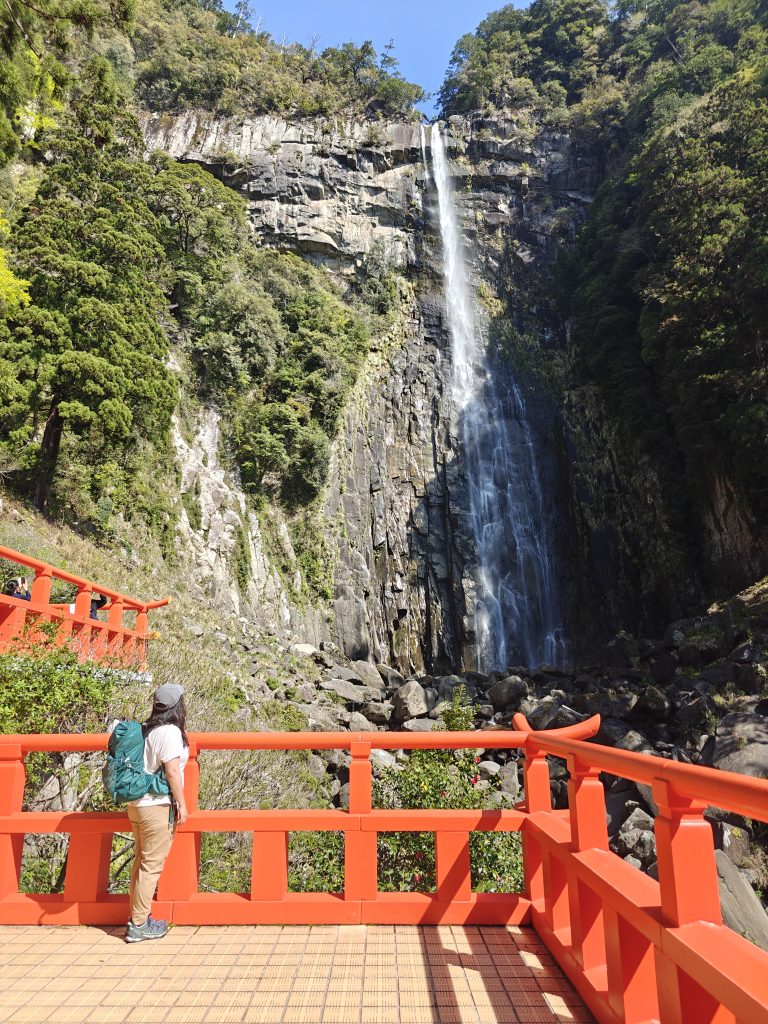
The trail continued towards Kumano Nachi Taisha. Along the way, I passed a photography spot I’ve seen on social media hundreds of times – the iconic three story pagoda with the waterfall framed perfectly behind it.
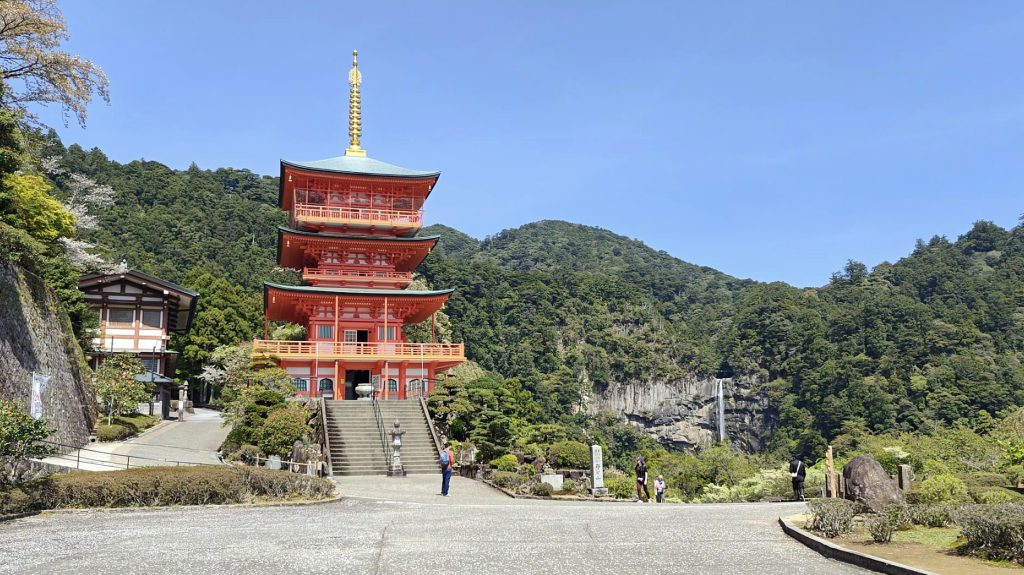
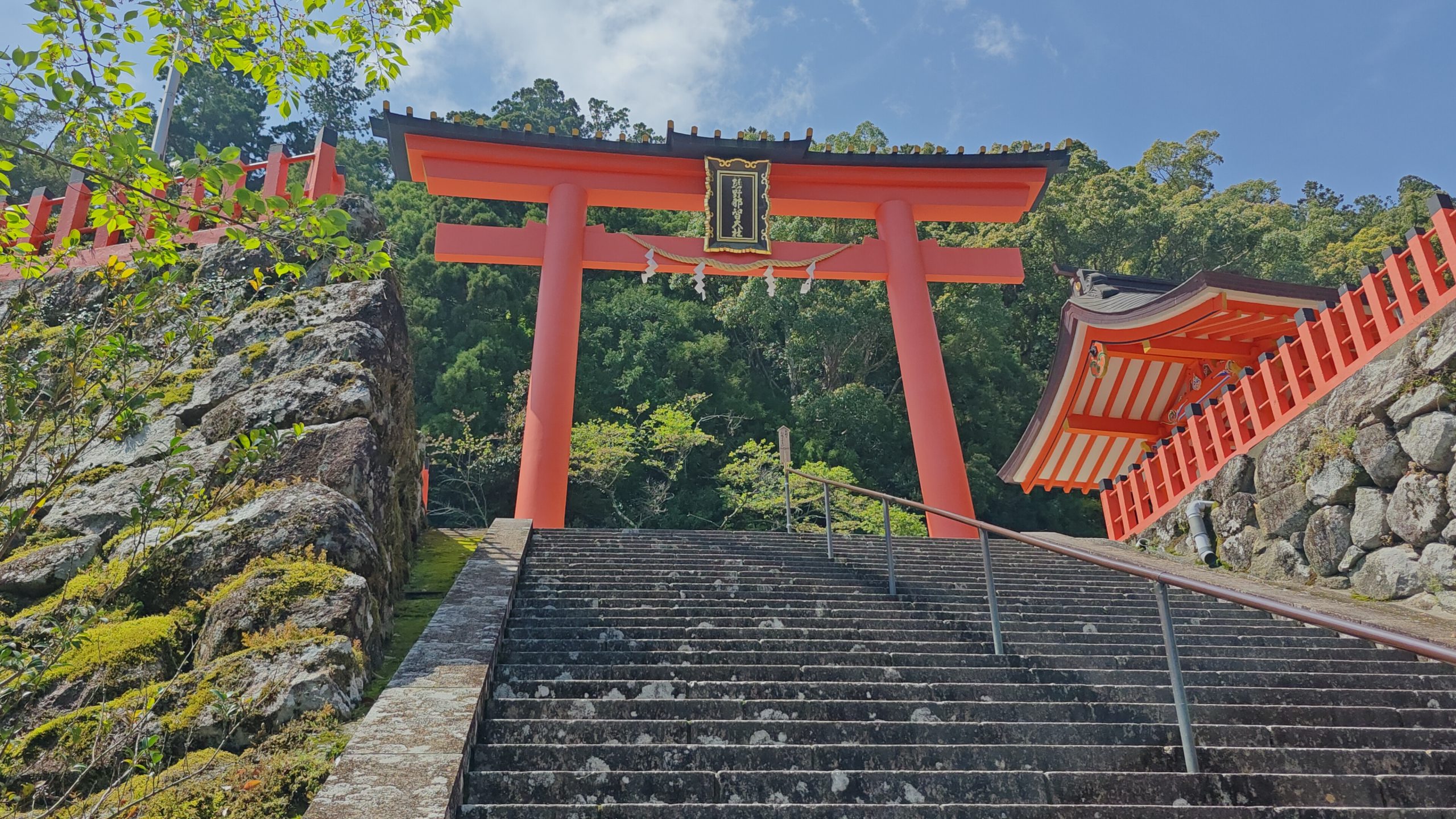
A few minutes later, I finally arrived at Kumano Nachi Taisha.

Of the three grand shrines, Nachi Taisha (which represents the present) left the deepest impression on me. It’s dramatic, powerful, and alive with the energy of nature.

To complete my pilgrimage, I must visit the third and final grand shrine.
A quick bus ride later, I stood at the entrance of Kumano Hayatama Taisha.
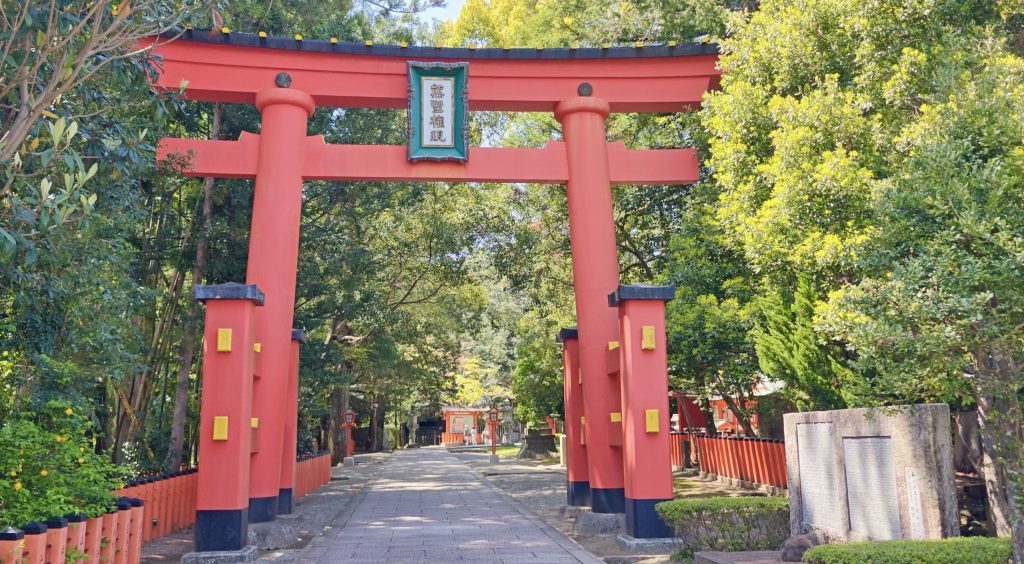
This grand shrine represents the past and I was reminded to reflect on my past, make peace with it and let go of what was no longer serving me.
As I walked around the shrine complex, I reflected on my journey these past few days.
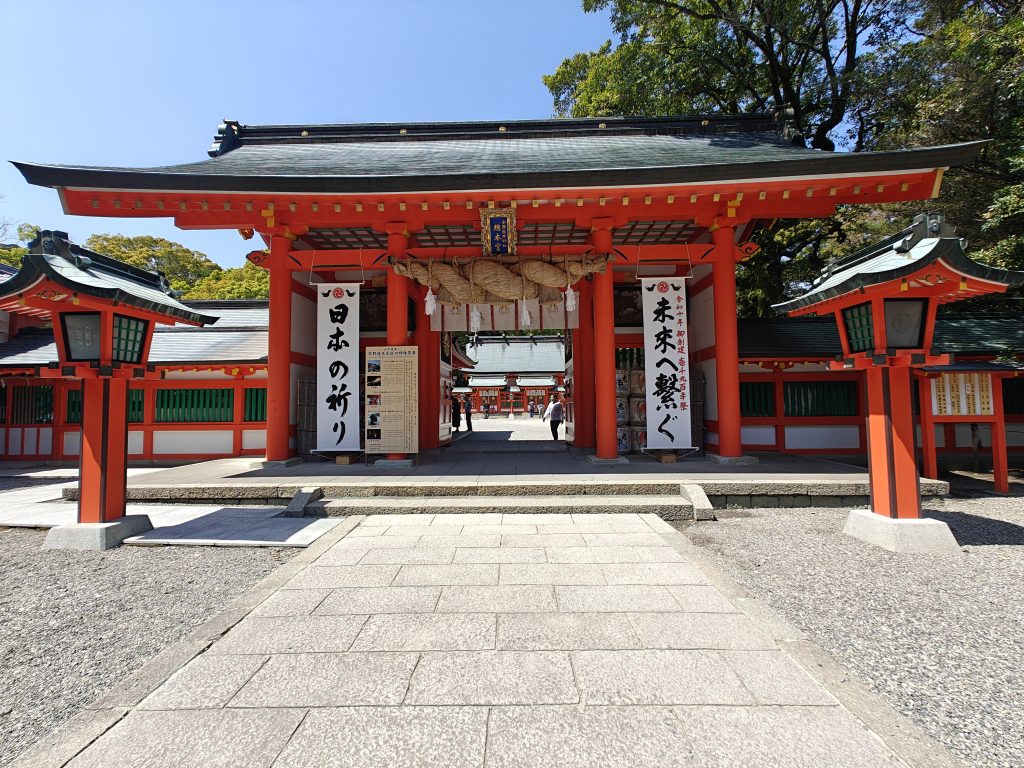
Even though initially I was disappointed not being to hike the entire trail due to my last minute planning, I was glad how it turned out. I visited all three grand shrines and hiked the most beautiful sections of the trail at my own pace. I met lots of friendly hikers from all over the world, and if I wanted to come back to do it all over again, I would know exactly how to plan it the right way next time.
This marked the official end of my Kumano Kodo pilgrimage, but the day wasn’t over yet.
I had one more surprise planned: an onsen built inside a natural cave right next to the ocean.
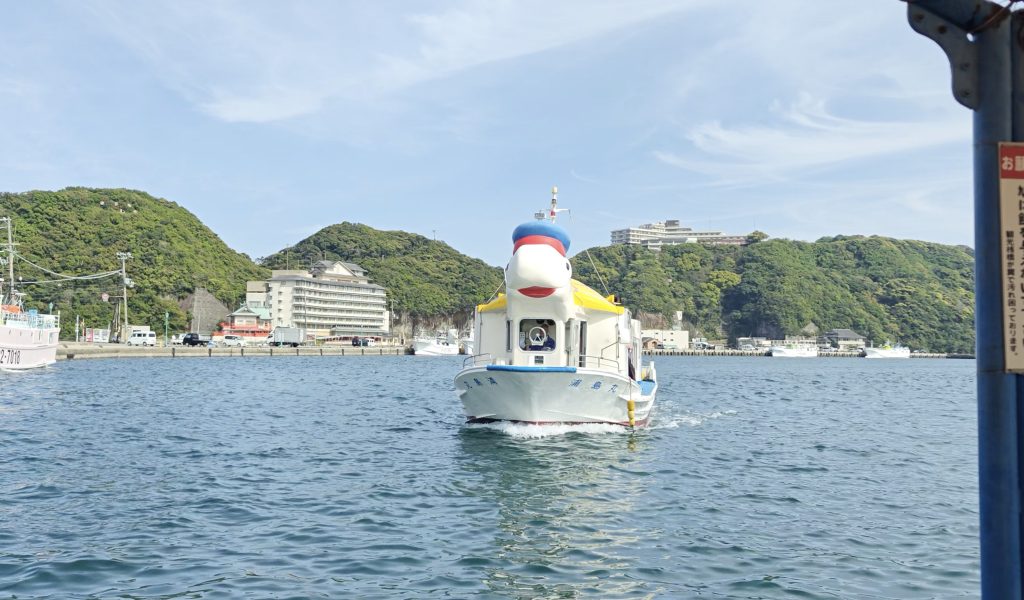
From Katsuura, I boarded a turtle-shaped boat to Hotel Urashima. Even if you don’t stay at the hotel, you can access their four hot springs baths by purchasing a day pass.
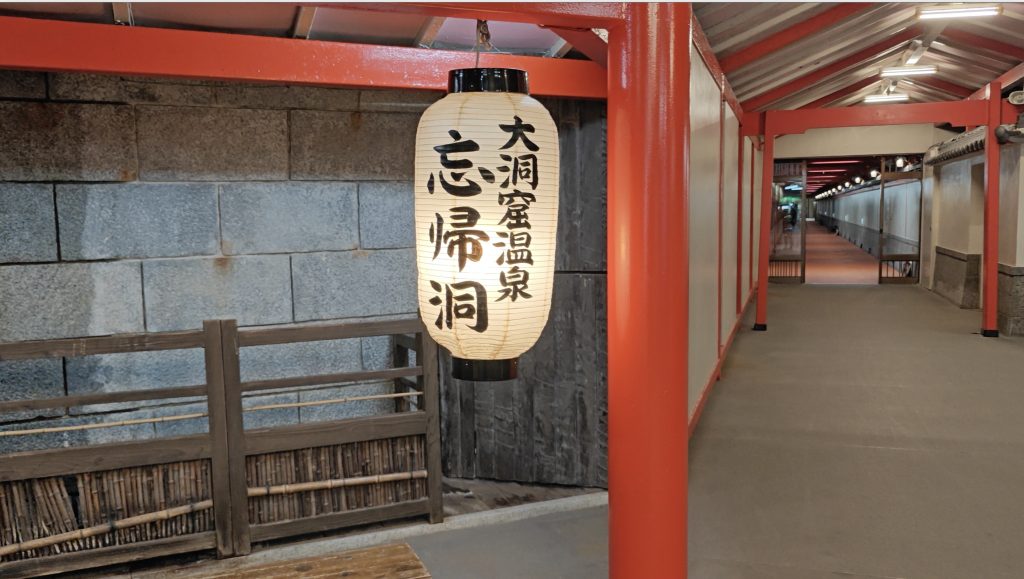
Since I didn’t have much time, I headed straight to the biggest onsen – the Bokido Cave. I couldn’t think of a more perfect way to end my 4 day solo hiking adventure – soaking in a natural hot springs pool inside a cave, with waves crashing beside me. It felt otherworldly, like a scene out of a fantasy movie.

With several pools at different temperatures and the sound of the ocean echoing off the rock walls, it was a fitting way to recover from days of hiking and celebrate finishing my Kumano Kodo pilgrimage.
Day 5: Saying Goodbye to Kumano Kodo & Travel Reflections
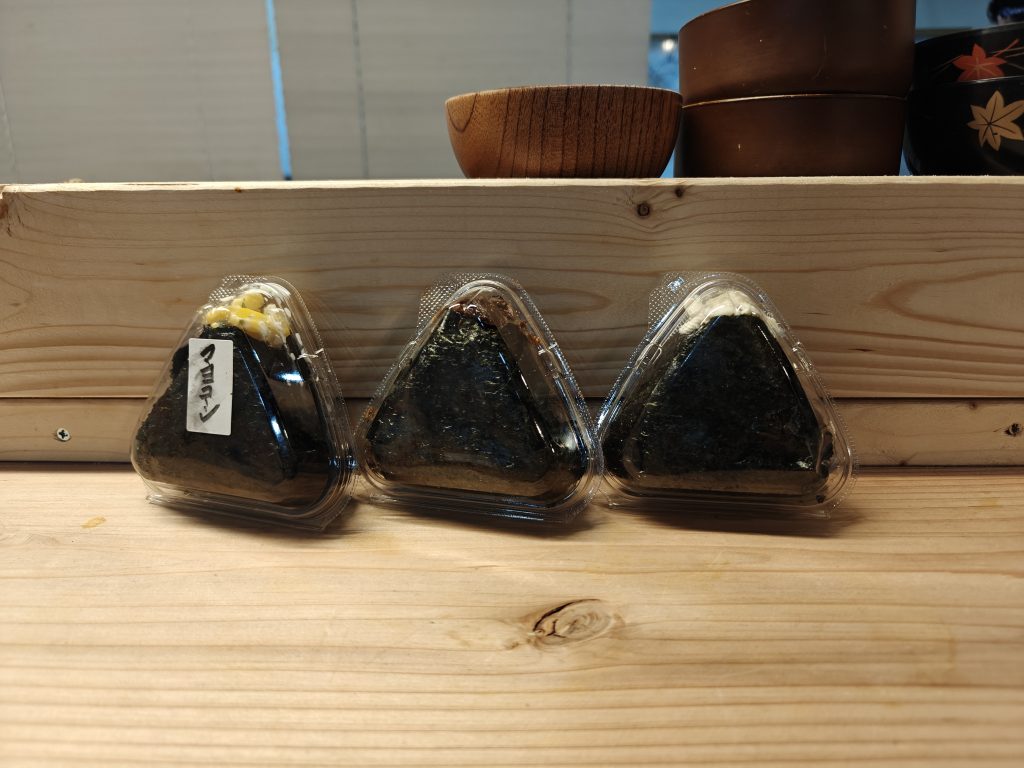
On my final morning in Katsuura, the rain started to drizzle again. I grabbed some last minute fancy rice balls from a rice balls specialty shop, Izakata Stand, in preparation for my train ride back to Osaka.

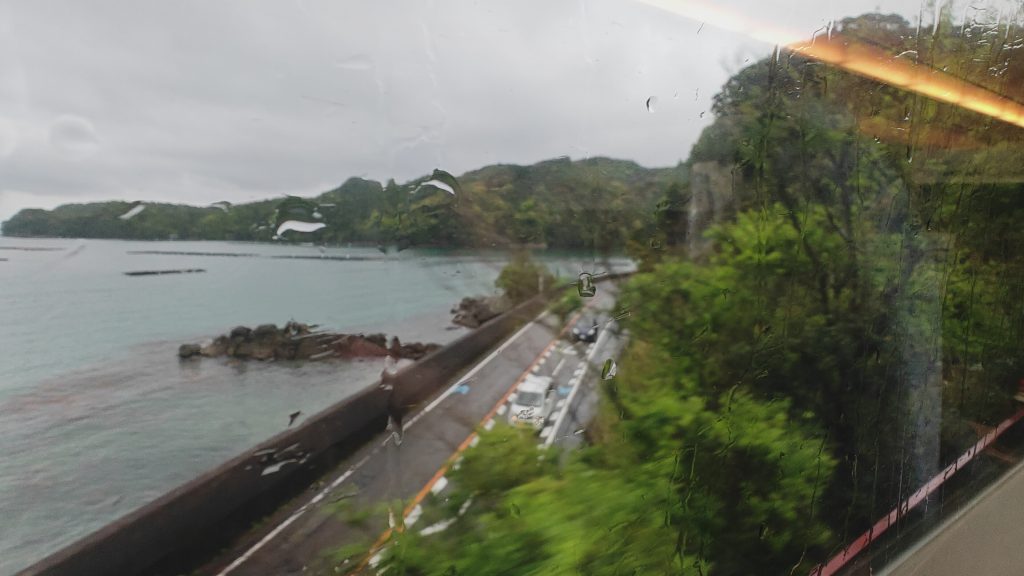
As the train carried me along the coastline back to Osaka, I reflected on everything the Kumano Kodo had given me.
In just a few days, I’d experienced steep climbs, sacred shrines, ancient forests, healing onsens, and countless moments of kindness. But more than anything, it was a journey of connection — to nature, to others, and to myself.
Looking back at my Kumano Kodo experience, what struck me most was the variety of experiences packed into just a few days. The trail manages to be both rugged and gentle. From rushing waterfalls to mossy forests, from quaint villages to healing hot springs, from ancient shrines to modern transportation networks, the Kumano Kodo has something for everyone.
But the real highlight was definitely the people I met along the way. From local guides to foreign travelers – these encounters felt serendipitous and made the whole journey feel like more than just another hike.
I was initially disappointed that I wasn’t able to complete the full Nakahechi route due to my last minute planning, but I was glad how it turned out.
Walking these ancient paths reminded me that transformation doesn’t always come from reaching a summit, or sticking to a strict itinerary. Sometimes it comes from simply taking the next step — and listening to what the journey has to teach you & being open to the possibilities of life’s grand adventure.
As a lifelong over-thinker and over-planner, it’s not always easy for me to just “go with the flow” and adjust my plans on the fly. But this trail taught me to focus on the next step, and trust that the next step will lead me to where I need to go… even if it leads to some surprises & detours along the way.
The journey is the destination. It seems to be the lesson I need to be reminded over and over again.
I came to Japan thinking I was just checking off another bucket list hike, but the Kumano Kodo turned out to be as much a spiritual journey as a physical one. Walking on trails that have been used for over a thousand years has a way of putting your own journey, and your story into perspective.
As the train curved along the ocean, I felt grateful, inspired, and already planning when I might come back.
More Posts in My Kumano Kodo Series
Whether you’re drawn by the history, the spirituality, or the sheer beauty of rural Japan, the Kumano Kodo Nakahechi Route offers a rare chance to slow down, reconnect, and walk with intention.
If you’re planning your own Kumano Kodo journey, make sure to check out the next posts in this series:
And if you’d like to see the full visual experience, you can watch my Kumano Kodo Vlog on YouTube for cinematic footage of the trail.
Have you hiked the Kumano Kodo? Share your experience in the comments! And if you found this guide helpful, don’t forget to pin it on Pinterest and share it with fellow hikers!









Leave a Reply